In the weeks before a big summer trip, the suitcase comes out earlier than it needs to. The packing list gets written, rewritten, and written again on a different piece of paper. You start mentally rehearsing the order of events at the airport with the focus of someone preparing for a military operation. The snack bag situation is assessed with seriousness.
It is, in many ways, one of the best feelings in the world. The anticipation of travel is its own kind of joy; the trip before the trip, happening entirely inside your head while you're still sitting at your kitchen table.
But here's the thing about summer travel in 2025: the administrative layer of getting from your front door to your destination has never been more complex, more changeable, or more consequential if you get it wrong. The world has added more pre-travel requirements, more digital systems, more health considerations, and more safety alerts in the past few years than in the previous decade combined. And while none of these things should put you off traveling — not even slightly — they do demand a level of preparation that goes well beyond remembering your toothbrush and downloading the Netflix shows you want to watch on the plane.
This is the checklist that covers everything. Not the fun stuff — the packing lists and the destination guides and the restaurant recommendations. The essential, non-negotiable, "your trip could genuinely go sideways without this" administrative preparation that every traveler needs to work through before a summer 2026 departure.
Work through every section. Tick every box. Then go enjoy yourself completely.
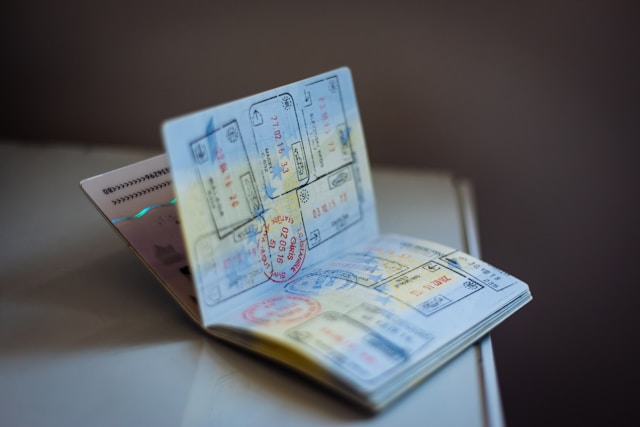
Documents, Passports, and the Rules That Have Changed
This is where most travel problems begin, and where the most consequential and time-sensitive preparation needs to happen first.
Check Your Passport Validity — And Then Check It Again
The single most common reason travelers are turned away at check-in — not at immigration, at check-in, before they've even reached the airport — is a passport that doesn't meet the destination country's validity requirements. Most people know their passport needs to be valid. What many don't realize is that most countries require your passport to be valid for six months beyond your intended return date, not just your departure date.
If your passport expires in October and you're traveling in July, you may be fine for the flight — but rejected at the border of your destination. Check the specific requirements for every country on your itinerary. If there is any doubt, renew before you travel. Passport processing times have been running longer than usual in many countries during peak season.
What you need to do: Allow at least 6-8 weeks for passport renewal in most countries. Longer in peak periods.
The European Entry/Exit System (EES) — The New Requirement Every Non-EU Traveler Must Understand
This is the pre-travel requirement that has caught the most travelers off guard in recent travel seasons, and it continues to generate confusion among people who have been visiting Europe for years without any additional formalities.
The European Union's Entry/Exit System (EES) is an automated digital registration system that records the travel details of non-EU visitors — including citizens of the United States, United Kingdom, Canada, and Australia — every time they cross an EU external border. Where previously your passport was simply stamped, the EES creates a digital record that includes facial image capture and fingerprint biometrics at the border crossing point.
Critically, the EES replaces the old passport stamp system as the primary method of tracking how long non-EU visitors spend in the Schengen Area. The existing rule — a maximum of 90 days within any 180-day period in the Schengen Zone — remains unchanged. What changes is how that period is tracked and enforced. Digital precision replaces ink stamps, and the system flags overstays automatically.
For summer travelers, the practical implications include potentially longer processing times at EU entry points as the system is used at scale — particularly at busy land borders, port entries, and major international airports. Build additional time into any itinerary that involves EU border crossings, and ensure all travel companions — including children — have the required documentation.
What you need to do: Check the latest EES implementation status and processing requirements for every EU entry point on your itinerary before departure.
ETIAS — Europe's Pre-Travel Authorization System
Alongside the EES, the EU is rolling out ETIAS — the European Travel Information and Authorisation System — which will require eligible non-EU nationals to obtain pre-travel authorization before visiting the Schengen Area. Think of it as the European equivalent of the US ESTA or Canada's eTA — an online application process that must be completed before departure, not on arrival.
ETIAS authorization will be required for citizens of currently visa-exempt countries, including the United States, United Kingdom, Canada, and Australia. The application is completed online, costs a small fee, and once approved, is valid for multiple trips over three years.
What you need to do: Check whether ETIAS is required for your nationality and travel dates, and complete the application well in advance of your departure.
ESTA, eTA, and Other Pre-Arrival Digital Authorizations
Europe is not the only destination requiring pre-travel digital authorization. Before any international trip, verify the specific entry requirements for every country on your itinerary:
- 🇺🇸 Visiting the USA? Non-US citizens from VWP countries require a valid ESTA approved before boarding. Apply at esta.cbp.dhs.gov.
- 🇨🇦 Visiting Canada? Most non-Canadian, non-US citizens require an eTA linked to their passport. Apply at canada.ca.
- 🇬🇧 Visiting the UK? The UK's Electronic Travel Authorisation (ETA) is now required for many nationalities previously exempt from visa requirements. Check gov.uk for current requirements.
- 🇦🇺 Visiting Australia? The Electronic Travel Authority (ETA) or eVisitor authorization is required for most nationalities.
- Many other destinations now operate digital pre-arrival systems — including Kenya, Rwanda, India, and an expanding list of others.
Rule of thumb: For every destination on your itinerary, search "[Country name] entry requirements [your nationality] 2026" at least eight weeks before departure. Requirements change with little notice.

Travel Safety Alerts — Know Before You Go
Check Your Government's Travel Advisory for Every Destination
Every government with a significant traveling population maintains an up-to-date travel advisory system that categorizes destinations by risk level. These advisories are updated regularly and reflect current intelligence about safety conditions on the ground.
- 🇺🇸 US travelers: travel.state.gov — State Department advisories rated 1-4 (Exercise Normal Caution through Do Not Travel)
- 🇬🇧 UK travelers: gov.uk/foreign-travel-advice
- 🇨🇦 Canadian travelers: travel.gc.ca
- 🇦🇺 Australian travelers: smartraveller.gov.au
Check every country on your itinerary — including layover countries if you plan to leave the transit area.
Middle East Travel Alerts — An Elevated Risk Landscape in Summer 2026
The security situation across the Middle East remains complex and fast-moving, and summer 2026 travelers with any itinerary touching the region need to approach their planning with particular care and up-to-date information.
Several areas carry the highest-level travel warnings from multiple Western governments:
- 🚫 Gaza and surrounding areas remain subject to Do Not Travel advisories from virtually every Western government. The ongoing conflict has created unpredictable and extremely dangerous conditions across a wide geographic area.
- ⚠️ Yemen continues to carry Level 4 Do Not Travel designations. The security situation remains extremely dangerous throughout the country.
- ⚠️ Iran carries Do Not Travel advisories from the United States and elevated risk warnings from most Western governments, reflecting the risk of arbitrary detention and the complex security environment.
- ⚠️ Iraq — outside of the Kurdistan Region — carries serious travel warnings reflecting ongoing security threats. Even the Kurdistan Region carries elevated caution advisories.
- ⚠️ Syria remains a Do Not Travel destination for citizens of most Western nations.
- ⚠️ Lebanon — the security situation remains elevated and volatile, with most Western governments advising against non-essential travel.
For travelers transiting through Middle Eastern hub airports — Dubai (DXB), Doha (DOH), Abu Dhabi (AUH), and Amman (AMM) are among the most commonly used transit points for connecting flights — the transit airports themselves are generally considered safe and well-operated. However, be aware of any airspace restrictions or rerouting that may affect flight times and connections, particularly for routes that would normally overfly conflict areas.
What to do: If any part of your routing passes through or near elevated-risk regions, check your airline's current routing information and allow extra connection time at hub airports in case of rerouting-related delays.
Register With Your Embassy
For travel to any destination rated above Level 1, or for extended international travel of any kind, register your trip with your home country's embassy or registration system:
- 🇺🇸 STEP (Smart Traveler Enrollment Program): step.state.gov — receives alerts and allows embassy contact in emergencies
- 🇨🇦 Registration of Canadians Abroad: travel.gc.ca/travelling/registration
- 🇬🇧 FCDO Travel Alerts: gov.uk/foreign-travel-advice
This takes five minutes and means that in the event of a natural disaster, civil unrest, or personal emergency abroad, your government knows you are in the country and can reach you.
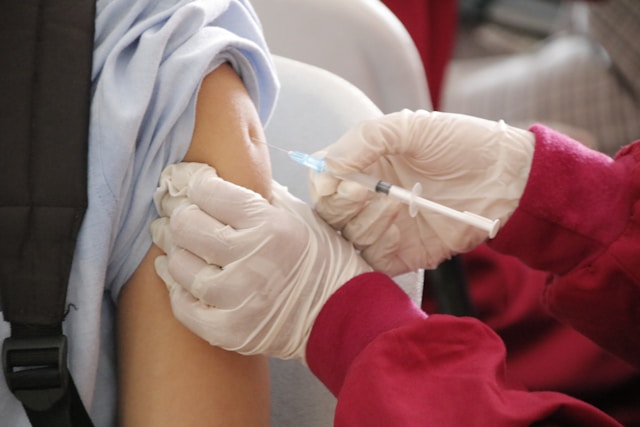
Health, Vaccinations, and Current Disease Alerts
Ebola — Know the Current Outbreak Status Before You Travel
Ebola virus disease remains an active concern in parts of Sub-Saharan Africa, and travelers planning itineraries to affected regions — or transiting through areas with active outbreaks — need to review current WHO and CDC guidance before departure.
The World Health Organization and the Centers for Disease Control maintain updated maps and advisories for all active Ebola outbreaks, with current guidance on which areas carry elevated risk, what precautions are recommended, and what symptoms to monitor for during and after travel.
Anyone traveling to or through central or east African countries — including Democratic Republic of Congo, Uganda, and neighboring nations — should review current outbreak status and ensure they have a clear plan for accessing medical care if needed during their trip.
Verify Your Travel Health Insurance — This Is Not Optional
Domestic health insurance — whether private or government-provided — typically provides little to no coverage for medical treatment received abroad. A medical emergency in a foreign country without adequate travel health insurance is not merely inconvenient. In countries without public healthcare accessible to foreign nationals, it can result in medical bills that run to tens of thousands of dollars before any treatment begins.
Before any international trip, verify:
- Does your existing health insurance cover international medical treatment? Read the policy carefully — many policies that claim "international coverage" provide only limited emergency repatriation and minimal treatment coverage.
- Does your coverage include medical evacuation? Being airlifted from a remote location to a medical facility capable of treating a serious condition can cost $50,000-$200,000 without insurance coverage.
- Is the destination covered? Some policies exclude specific countries or regions — including those carrying government travel advisories above a certain level.
- Does it cover pre-existing conditions? Many travel insurance policies exclude pre-existing conditions by default — check your policy carefully if this applies to anyone in your traveling party.
- Does it cover adventure activities? Hiking, diving, skiing, and many other common vacation activities are excluded from standard travel health insurance policies. Ensure your coverage reflects what you'll actually be doing.
Recommended: Purchase comprehensive travel insurance that includes medical coverage, medical evacuation, trip cancellation, and baggage protection for every trip. For family travel, verify that all travelers — including children — are explicitly covered.
Vaccinations and Required Health Documentation
Check vaccination requirements and recommendations for every destination at least six to eight weeks before departure as some vaccines require multiple doses administered over several weeks.
- Yellow Fever vaccination is a legal entry requirement for travel to or from certain countries in Africa and South America — not just recommended, required, with a valid International Certificate of Vaccination (the yellow card) needed at the border
- Routine vaccinations should be up to date — check Hepatitis A and B, Typhoid, Tetanus, and MMR status
- Malaria prevention — check current requirements and get any necessary prophylactic medication prescribed well in advance
Resource: The CDC's Travelers' Health destination pages (wwwnc.cdc.gov/travel) provide comprehensive, up-to-date vaccination and health recommendations by country.

Money, Security, and the Practical Layer
Inform Your Bank and Credit Card Providers
Most financial institutions now have sophisticated fraud detection that will freeze your card the moment it's used in an unexpected foreign location, which is exactly as inconvenient as it sounds when you're trying to pay for dinner in a city that doesn't accept cash easily. Notify every card you plan to use of your travel dates and destinations before departure.
Also check:
- Foreign transaction fees on your cards — some charge 2-3% on every international purchase
- ATM withdrawal fees abroad — consider a travel card or account with no international ATM fees
- Whether your debit card works on international networks (Visa/Mastercard vs. local networks)
Copies of Everything Important — Digital and Physical
Before departure, make copies of:
- 📄 Passport photo page
- 📄 Visa and pre-travel authorization documents (EES, ETIAS, ESTA, etc.)
- 📄 Travel insurance policy and emergency contact numbers
- 📄 Flight and accommodation confirmations
- 📄 Vaccination certificates if required
- 📄 Emergency contact information for each destination's embassy or consulate
Store copies in your email (accessible from any device worldwide), a secure cloud storage service, and a physical copy in your luggage separate from the originals.
TSA PreCheck, Global Entry, and Trusted Traveler Programs
If you are a frequent traveler and not yet enrolled in TSA PreCheck or Global Entry, summer 2026 is the season that will make you wish you had. With World Cup travel adding millions of additional passengers to already-strained airport systems, security lines at major U.S. hubs are projected to be at or beyond historic highs during the peak summer window.
- TSA PreCheck: Faster domestic security lanes — shoes on, laptop in bag, no belt removal. Available at most major U.S. airports. Five-year membership.
- Global Entry: Includes TSA PreCheck and adds expedited customs processing on return from international travel. Requires an in-person interview but is well worth the additional process for regular international travelers.
- NEXUS: Specifically for US/Canada border crossings — ideal for travelers who regularly move between the two countries and relevant for anyone attending World Cup matches in Canadian host cities.

The Accommodation and Logistics Layer
Book Everything in Advance — Seriously, Everything
Summer 2026 is not the travel season for spontaneity. World Cup demand has compressed accommodation availability and pushed prices in host city regions to levels that make advance booking not just advisable but essential for anyone with a realistic budget. The same applies to rental cars, train tickets, and any activity or experience with fixed capacity.
Book in advance:
✅ Flights — obviously
✅ Accommodation — including backup options if you're traveling to World Cup host cities
✅ Airport transfers and transportation
✅ Car rental — inventory is tight and prices rise sharply as departure approaches
✅ Any ticketed experiences, tours, or activities
Pre-Book Your Airport Parking — Don't Let It Be the Thing That Derails Everything
Here's the checklist item that more travelers skip than any other, and that more travelers regret skipping than almost any other.
Airport parking during peak summer travel season is expensive, stressful, and frequently unavailable at a reasonable price if you leave it to the last minute. At major hub airports during the World Cup window especially, on-site parking facilities will be at premium pricing and reduced availability as the surge in visitors compresses every aspect of airport capacity.
OneStopParking solves this cleanly, affordably, and in advance.
The service connects travelers with parking at hotels near their departure airports, where the hotel provides a shuttle service directly to and from the terminal. Daily rates through OneStopParking are consistently and significantly lower than official on-site airport parking rates, often by 50% or more. The shuttle means you never have to wrestle with airport parking structures, circling for a space, or paying surge prices for an emergency last-minute spot.
The OneStopParking rewards program means every dollar spent earns 100 points toward Silver and Gold tier status — with points that never expire. For frequent summer travelers, the cumulative value of the rewards program adds meaningfully to the savings on every individual booking.
In a summer with elevated costs at every turn, match tickets, transit fares, accommodation, and everything else, airport parking through OneStopParking is one of the most straightforward places to protect your budget without sacrificing any quality of experience.
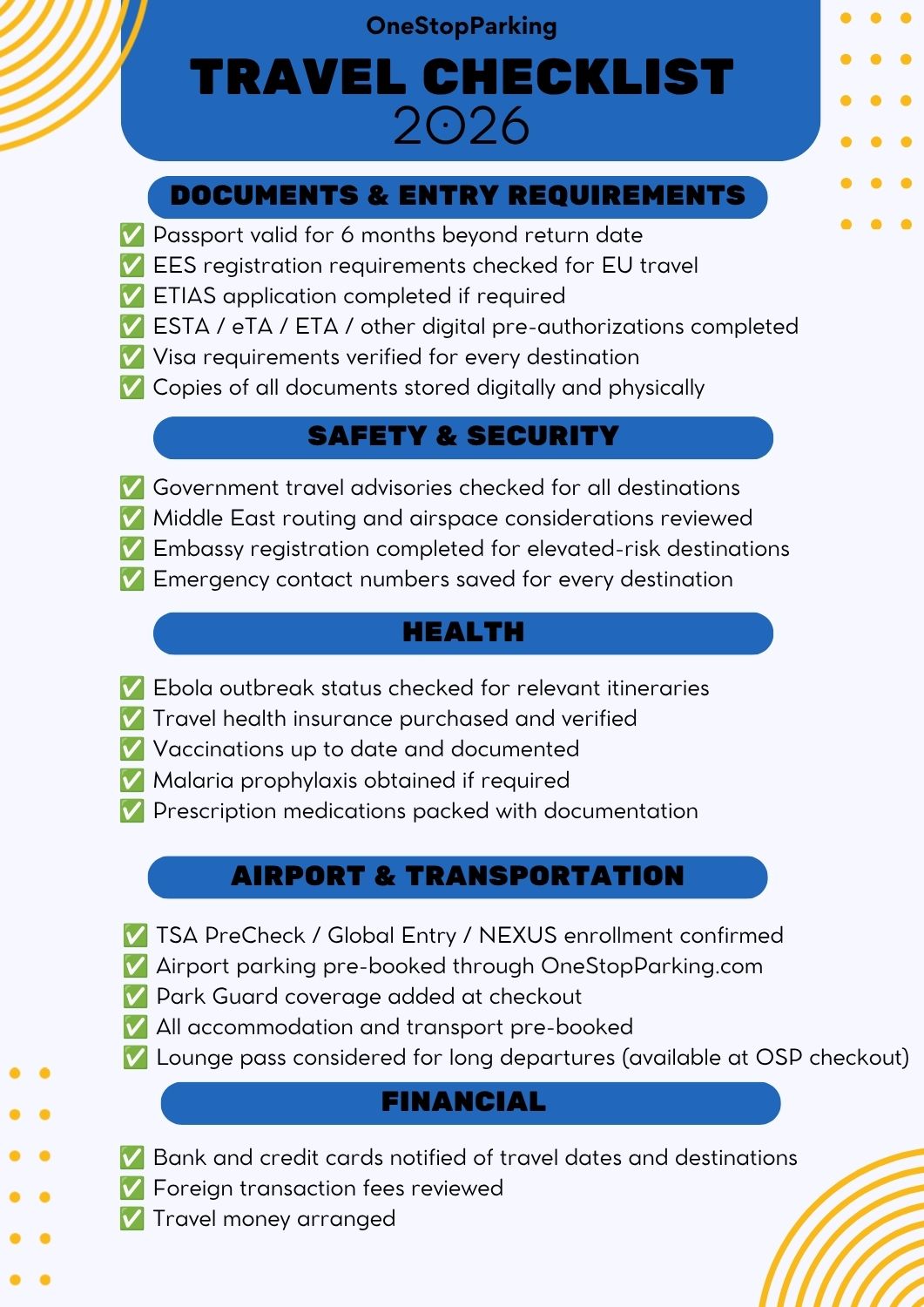
The Complete Summer 2026 Pre-Travel Checklist
Frequently Asked Questions: Summer Travel Preparation
Q: What is the EU Entry/Exit System and does it affect my summer travel plans?
The EU Entry/Exit System is a digital border management system that records the entry and exit of non-EU nationals crossing the Schengen Area's external borders. It captures biometric data including facial images and fingerprints and replaces the traditional passport stamp system for tracking the 90-day Schengen stay limit. For travelers from the US, UK, Canada, Australia, and other currently visa-exempt nations, the EES does not change whether you can enter Europe, it changes how that entry is processed and recorded. Practical implications include potentially longer border processing times as the system scales up, making additional transit time advisable for summer 2025 European itineraries.
Q: How serious are current Ebola travel warnings and who needs to pay attention?
Current Ebola advisories are most relevant to travelers with itineraries that include central and east African countries, particularly the Democratic Republic of Congo and neighboring nations where outbreaks have been reported. For travelers whose itineraries don't include these regions, the direct risk is very low. However, all international travelers should familiarize themselves with early Ebola symptoms like fever, severe headache, muscle pain, weakness, and unexplained bleeding, and seek immediate medical attention if these develop during or after travel to affected areas. The WHO and CDC maintain current, updated outbreak maps that should be checked before any African travel.
Q: Why should I pre-book airport parking through OneStopParking rather than just paying at the airport on the day?
Three reasons, all of which matter more during a busy summer travel season than at any other time. First, pre-booking locks in your daily rate, on-the-day airport parking prices surge with demand, and during the summer World Cup period, on-site rates at major hub airports will reflect the elevated pressure. Second, pre-booking guarantees your spot, the best-value parking facilities near major airports will fill up, and arriving without a reservation risks having to use more expensive last-minute alternatives. Third, the OneStopParking park-and-fly model, with hotel shuttle service to and from the terminal, delivers a consistently better arrival and departure experience than on-site parking at a fraction of the cost. Every booking also earns rewards points that accumulate toward meaningful future savings.
Q: What is the biggest mistake travelers make in their pre-trip preparation?
The most consistent and consequential pre-travel mistake is leaving administrative preparation too late. Passport renewals that should have started eight weeks out are initiated three weeks before departure. Visa applications that require appointment slots in limited supply are started after those slots are gone. Pre-travel authorizations like ESTA or ETIAS are remembered at the airport rather than at home. And travel insurance is purchased at the gate rather than at the time of booking — after the cancellation and disruption coverage that would have been most valuable has already been missed. The checklist in this article exists precisely to prevent each of these scenarios. Work through it early, work through it completely, and then focus entirely on the experience you've worked so hard to prepare for.