The moment you step off a plane in an unfamiliar city, you are operating at a disadvantage. You do not know where you are going. You are carrying more valuable items than usual. You are distracted, possibly jet-lagged, definitely focused on finding your hotel rather than watching who is standing next to you on the metro. For the small percentage of people out there who make a living exploiting exactly that situation, you are a very appealing target.
Travel scams cost the global economy around $13 billion annually, a figure that has grown from $2.1 billion in 2019. Around 13 million people fall victim to travel scams every year, and more than a third of all travelers end up losing $1,000 or more to fraud of some kind. Business travelers, perhaps counterintuitively, are more likely to be targeted than leisure travelers, accounting for 65% of victims compared to 35% for those traveling for pleasure.
None of this means travel is dangerous. The overwhelming majority of people you meet anywhere in the world are decent, honest, and genuinely helpful. But a small and determined minority runs sophisticated operations designed to separate you from your money in ways you may not even notice until you are back home and reviewing your bank statement. Knowing what those operations look like before you encounter them is the single most effective defense you have.
Here are the travel scams worth knowing, where they tend to happen, and exactly how to handle them.
The Taxi Meter That Seems to Have a Mind of Its Own
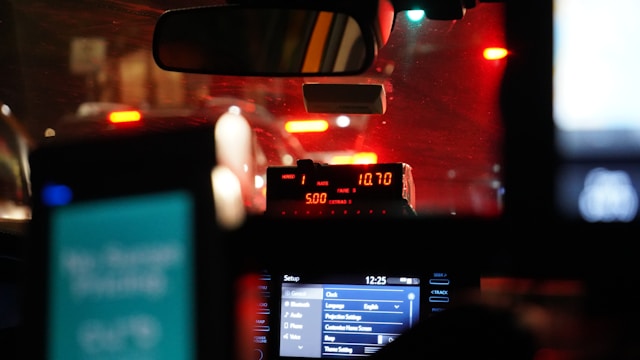
You flag down a cab, throw your bags in the back, and head to your hotel. You watch the meter tick. It seems to be ticking faster than it should, but you have no reference point because you have never taken this journey before. You arrive, pay what the driver asks, and later find out from another traveler that the same journey cost them half as much.
Taxi meter fraud takes several forms. Some drivers physically modify their meters to run at an accelerated rate. Others install a concealed switch, often mounted somewhere under the dashboard, that they can flip while driving to bump the rate without you seeing any physical interaction with the meter itself. A third variant is the driver who tells you the meter is broken and offers to calculate the fare manually at the end of the ride, a calculation they are generally very reluctant to explain in detail.
This scam is particularly common in parts of Northeastern and Southeastern Asia, Eastern Europe, and Northern Africa, though it surfaces everywhere tourists and cabs coexist in sufficient numbers.
The practical defense is simple. Research the typical fare for your key journeys before you land, either from the airport to your hotel or between neighborhoods you plan to visit. Use ride-sharing apps where available because the price is set in advance and there is no meter to tamper with. In cities where ride-sharing is unavailable or unreliable, ask your hotel staff what a reasonable taxi fare looks like before you go anywhere.
The Friendly Stranger and the Free Gift

Someone approaches you on a street in Paris, Rome, or Barcelona. They are smiling, warm, and entirely unthreatening. They offer you something for free, a woven friendship bracelet, a small token, a flower. Before you have processed what is happening, they are tying it to your wrist and telling you it brings good luck. Then they ask for a donation. The amount they have in mind is significantly more than a small gift warrants, and the friendliness evaporates quickly when you decline.
Meanwhile, in a version of the same scam, an accomplice has been working your pockets or bag from behind.
The friendship bracelet scam is so strongly associated with Paris, specifically the area around Montmartre and the Sacré-Cœur, that it is sometimes simply called the Paris Scam. But it shows up throughout Western Europe, particularly in heavily touristed areas and on popular train routes.
The response is clean and straightforward. Do not accept anything from someone who approaches you unsolicited on a tourist street. Declining is not rude in this context. It is just practical. Keep walking, keep your hands in your pockets, and do not engage. A polite but firm no and continued forward momentum is all you need.
The ATM That Takes More Than You Asked For
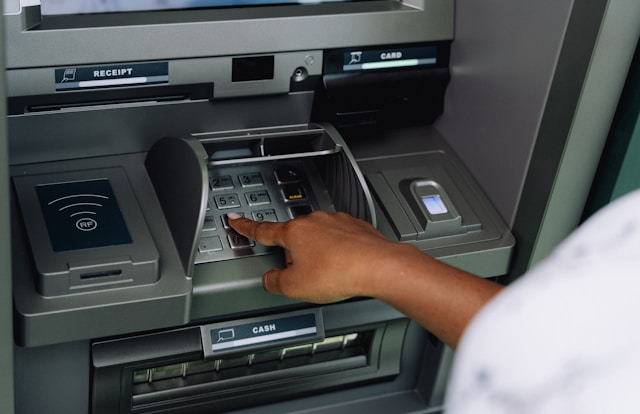
Card skimming is among the more technically sophisticated travel scams on this list, which makes it harder to detect with the naked eye but no less common. A skimming device is a piece of hardware fitted over the legitimate card reader on an ATM or payment terminal that captures your card data when you swipe or insert. A small hidden camera, often positioned above the keypad or built into a fake panel, records your PIN as you enter it. The scammer collects the device later, extracts your card details, and makes transactions against your account from wherever in the world they happen to be.
This happens at standalone ATMs in tourist areas, at exchange kiosks, and occasionally at point-of-sale terminals in smaller establishments where oversight is limited.
Checking an ATM before you use it takes about ten seconds and is well worth the habit. Pull at the card slot. If it wobbles or feels loose, walk away. Look for anything that seems slightly misaligned with the rest of the machine, a panel that does not quite match the surrounding material, a camera housing that looks out of place above the keypad. Use ATMs inside banks during opening hours wherever possible. Cover the keypad with your other hand when entering your PIN regardless of your surroundings.
The Rental That Looks Nothing Like the Photos

The fake or misleading rental scam has grown significantly with the rise of short-term rental platforms, and it takes more forms than most travelers realize. At the extreme end, the property does not exist at all, and the host disappears with the deposit. More commonly, the scam is subtler: photos taken with a wide-angle lens at a flattering angle that turns a cramped studio into what appears to be a spacious apartment, amenities listed that do not actually work or do not exist, or a property in a location that is described as central but is not remotely near anything you actually want to be near.
Multiple-booking fraud is another variant, where a scammer lists the same property across several platforms, accepts multiple bookings for the same dates, and then cancels the lowest-paying reservation at short notice, leaving those travelers scrambling.
Fake rental scams concentrate in high-demand markets. New York, Las Vegas, Paris, Tokyo, and Mexico City all see significant volumes of this kind of fraud, anywhere where rental demand is high enough that a fake listing can be filled quickly before anyone looks too closely.
Booking through established platforms with genuine review histories, verified host profiles, and clear cancellation and dispute resolution policies is the first line of defense. Read reviews skeptically and look for a range of writing styles rather than a suspiciously uniform tone that suggests paid or fabricated reviews. If a deal seems dramatically better than comparable listings in the same area, treat that as a signal rather than a lucky find.
Pickpocketing: The One Everyone Knows About But Still Falls For
Pickpocketing remains the most prevalent travel scam in the world, and its persistence is a testament to how effective distraction and misdirection are even on travelers who know perfectly well that it happens.
The techniques are diverse. A sudden collision or stumble that turns out to have been deliberate. A small argument or altercation nearby that causes everyone in the vicinity to look in the same direction. Someone asking for directions while an accomplice works behind you. An item dropped in front of you that prompts you to bend down. The common thread in all of these is distraction, a moment where your attention moves from your surroundings and your belongings to something else entirely.
The cities most associated with pickpocketing include Rome, Florence, Athens, Paris, Amsterdam, Madrid, Prague, Buenos Aires, Hanoi, and Barcelona. This is not a complete list. Pickpockets operate in virtually every major tourist destination on earth, but these cities tend to generate the highest volume of reports relative to visitor numbers.
Anti-theft bags with lockable zippers, RFID-blocking compartments, and slash-resistant straps address a meaningful portion of the mechanical risk. Wearing a money belt under your clothing for passports and larger amounts of cash is a habit that veteran travelers return to in high-risk areas for good reason. Leaving anything you do not absolutely need for the day at the hotel rather than carrying it around the city reduces what is available to be taken.
The Fake Police Officer
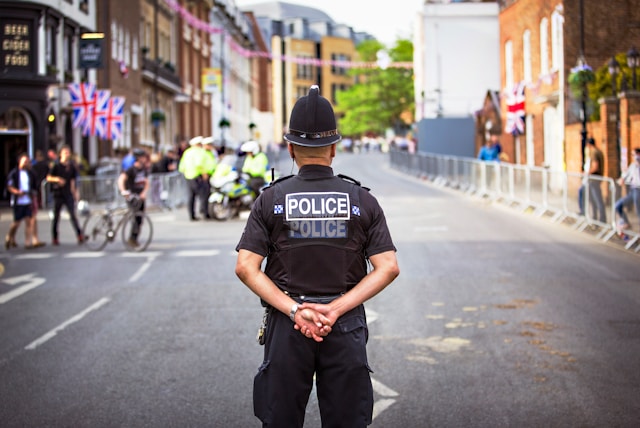
You are walking through a city, and someone approaches you, either in uniform or showing what appears to be a badge, claiming to be a plainclothes police officer. They tell you there has been a report of counterfeit currency circulating in the area and they need to inspect your wallet. Or they tell you drug residue was found near where you were standing and they need to see your passport. Or they suggest your currency is illegal and needs to be verified.
None of this is real police work. Real police officers do not approach tourists at random to inspect their cash or passports on the street.
The goal is either to walk away with your wallet or to photograph your documents for use in identity fraud. This scam is common in parts of Eastern Europe and Latin America but appears in tourist areas worldwide.
The correct response to anyone claiming to be a police officer who approaches you in this way is to decline to hand over anything and to suggest that you are happy to accompany them to the nearest official police station. Legitimate officers will not object to this. Anyone running this scam will find a reason to move on very quickly.
The Free Wi-Fi Network That Costs You More Than You Planned
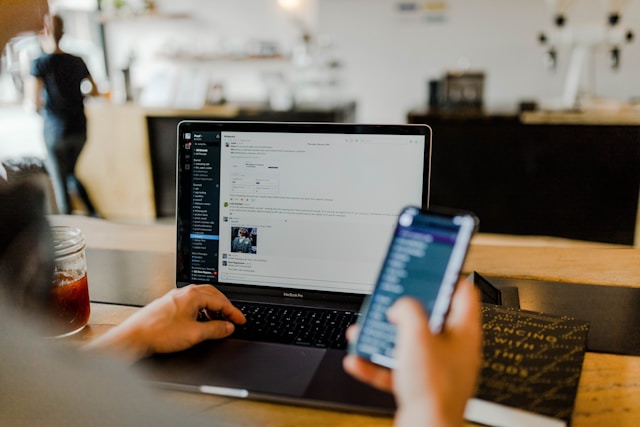
Airports, cafes, hotels, and tourist areas offer free Wi-Fi as a matter of routine, and travelers rely on it constantly. The problem is that setting up a rogue Wi-Fi network with a name that mimics the legitimate local network takes almost no technical expertise and gives whoever is running it the ability to intercept unencrypted data from every device that connects to it.
You connect to what you think is the airport's Wi-Fi. You check your banking app, enter a password, or access something sensitive. The person who set up that network has visibility into what you just transmitted.
This one is entirely avoidable. Use a VPN on public networks. Do not access banking, email accounts containing sensitive information, or anything requiring a password while connected to public Wi-Fi you did not personally verify. Use your phone's mobile data for anything important. If you need to connect to a hotel or airport network, verify the exact network name with staff before connecting rather than choosing the most obvious-looking option from the list.
The Restaurant Bill That Does Not Add Up
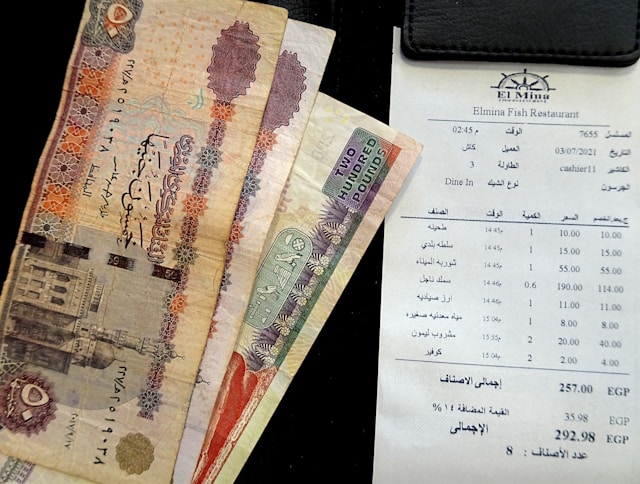
This one is so common in certain tourist areas that locals sometimes refer to it casually as a tax on not reading the menu carefully. You sit down at a restaurant near a major attraction. The menu does not have prices, or the prices are small and the surrounding text is large, or the English-language menu has different prices from the local-language one sitting two tables over.
You order food and drinks, perhaps including items a friendly waiter specifically recommended, and the bill arrives at a figure that bears no obvious relationship to what you expected to pay. Service charges, cover charges, charges for bread you did not ask for, and inflated prices for items that were never clearly priced are all standard components of this particular playbook.
Asking for the price before ordering anything not clearly priced on the menu is the obvious solution and one that most travelers feel awkward doing but should not. Checking reviews specifically for comments about pricing before choosing a restaurant near any major attraction is also worth doing. The presence of a physically laminated menu with no visible prices outside a restaurant on a heavily touristed street is a reasonable signal that the inside experience may not be straightforward.
How to Spot a Scam Before It Spots You
Most scams share a common set of characteristics that are recognizable once you know what to look for.
- The urgency signal: Any situation that requires you to act immediately, hand something over now, make a decision this second, without time to think, is almost always manufactured. Legitimate situations do not typically require that kind of immediate compliance from a stranger.
- The too-good quality: A deal that is dramatically better than everything around it is worth treating with suspicion rather than gratitude. This applies to accommodation listings, taxi fares quoted before you get in the cab, tickets to events, and anything else where price is the primary reason to engage.
- The distraction component: Any sudden commotion, collision, or unsolicited interaction in a crowded tourist area should prompt you to check your belongings, not look at whatever caused the distraction. The distraction is often the mechanism, not the event itself.
- Pressure to use unusual payment methods: Any vendor, landlord, or service provider who specifically asks for gift cards, cryptocurrency, wire transfers, or other payment methods that cannot be reversed or traced is describing a scam. Legitimate businesses take standard payment methods.
- Physical signs of ATM tampering: A card slot that wiggles, a keypad that seems slightly raised, a camera housing that does not match the rest of the machine, or any adhesive residue around the card reader are all worth walking away from.
What to Do If Someone Approaches You
The discomfort most travelers feel about being rude to strangers works in scammers' favor. Social conditioning toward politeness is a tool they use deliberately. Overriding that impulse in specific contexts is a skill worth developing.
Avoid making extended eye contact with anyone who seems intent on engaging you in a tourist area without an obvious reason for the interaction.
Keep moving. A scammer who has identified you as a target is relying on you stopping. Not stopping solves a significant portion of the problem.
Keep your hands on your belongings when anyone you do not know is in close physical proximity to you in a crowded space.
If someone will not leave you alone, walking toward a uniformed police officer, a security guard, or the entrance to a shop or hotel resets the dynamic. Scammers do not generally follow targets into supervised spaces.
In genuinely threatening situations, the priority is always getting to a safe and populated area rather than confronting anyone or attempting to retrieve anything that has already been taken.
Frequently Asked Questions About Travel Scams
Q: How common are travel scams?
Around 13 million people fall victim to travel scams every year, with total losses reaching approximately $13 billion annually as of the most recent data. More than a third of all travelers lose $1,000 or more to travel-related fraud at some point.
Q: Which travelers are most likely to be targeted?
Business travelers account for 65% of travel scam victims compared to 35% for leisure travelers. This likely reflects a combination of factors including the perception that business travelers carry more valuable equipment, the distraction of working while traveling, and the frequency with which they move through airports and unfamiliar cities.
Q: What are the most pickpocket-heavy cities in the world?
Cities most commonly cited in pickpocket data include Rome, Florence, Paris, Athens, Amsterdam, Madrid, Prague, Barcelona, Buenos Aires, and Hanoi. These cities have high volumes of tourists relative to their size, which creates the conditions under which pickpocketing tends to be most active.
Q: Is it safe to use ATMs abroad?
It is generally safe to use ATMs located inside bank branches during business hours and at well-lit, high-traffic locations. Standalone ATMs in tourist areas, transport hubs, and nightlife districts carry more risk of skimming devices. Checking the machine physically before inserting your card and covering the keypad when entering your PIN reduces the risk significantly.
Q: What should I do if I realize I have been scammed?
Report the incident to local police, even if the likelihood of recovering your money is low. A police report creates a record and supports any insurance claims or bank disputes you make on your return. Contact your bank or card issuer immediately if your card details may have been compromised. If you are in a country with a tourist police service, which many popular destinations have, they often handle these incidents with more familiarity than general police stations.
Q: Can travel insurance cover scam-related losses?
Some comprehensive travel insurance policies include coverage for theft and fraud, which may cover losses resulting from pickpocketing or certain forms of financial fraud. Policies vary significantly, so reading your policy terms carefully and understanding what is and is not covered before you travel is important. Losses resulting from voluntarily handing money to someone who turned out to be a scammer are generally harder to claim than straightforward theft.
Q: How do I verify that a rental property is legitimate before booking?
Book through established platforms with verified host systems, genuine review histories with varied writing styles, and clear dispute resolution processes. Look up the address independently to confirm the property exists at that location. Video call the host before paying a deposit if anything about the listing makes you uncertain. Be cautious of any host who asks you to move communication off the platform before the booking is confirmed, a common precursor to deposit fraud.
Q: Are travel scams worse in certain regions?
Scam types vary significantly by region rather than one region being universally more dangerous than another. Meter tampering tends to be more common in parts of Eastern Europe and Southeast Asia. Pickpocketing is most frequently reported in Western European tourist cities. Card skimming occurs worldwide but concentrates in areas with less regulatory oversight of ATM infrastructure. Researching the specific scams most common in your destination before you travel is more useful than a general regional risk assessment.
Q: What causes airport parking services to feel unsafe or inconvenient?
A few things tend to create that uneasy feeling, and most of them come down to lack of information rather than genuine danger. Unmarked or poorly lit lots, facilities without visible security cameras or staffing, and parking services that take your booking money without providing clear confirmation details all generate the kind of low-level anxiety that makes returning to your car after a long trip feel more stressful than it should. Unreliable or infrequent shuttle services add to this, particularly when you are arriving late at night with luggage and no clear sense of how long you will be waiting.
The most straightforward way to avoid this is to book through a reputable platform like OneStopParking, where facilities are reviewed by real travelers and listings clearly state what security measures, shuttle schedules, and accessibility features are in place before you commit to anything. Reading recent reviews specifically for comments about the return experience, not just the drop-off, gives you the most accurate picture of what a facility is actually like when you need it most. An airport parking lot that feels secure and runs on a predictable schedule is one less thing to worry about on a trip where you are already managing plenty of moving parts.