The freedom that comes with solo travel is unmatched. Nobody is slowing you down. Nobody needs an extra twenty minutes to find their other shoe. Nobody wants to stop at a different gate restaurant when you have already committed to the one with the good breakfast sandwiches. You move at your own pace, make your own calls, and answer to absolutely nobody from the moment you leave the house to the moment you land.
But solo travel also means that when something goes wrong, you are the one who has to fix it. There is no travel companion to watch your bag while you grab a coffee, nobody to keep you calm when the gate changes at the last minute, and no one to split the cost of a cab when the shuttle situation turns out to be more complicated than expected.
Getting the airport side of solo travel right makes everything else easier. This guide covers exactly that.
Why More People Are Traveling Solo Than Ever
Solo travel is not new, but the scale of it right now is. An increasing number of people across every age group and demographic are choosing to travel alone, and the reasons behind that shift say a lot about how working life and personal priorities have changed.
Business travel is the most obvious driver. Corporate travel never really stopped being a solo activity. Millions of people fly alone for work every single week, navigating airports, rental cars, and hotel check-ins without a second thought. For frequent business travelers, solo airport navigation becomes second nature out of sheer repetition.
The rise of remote work and digital nomad culture has added a whole new category of solo traveler to the mix. People who work entirely online and can base themselves anywhere have turned the concept of a fixed home into something optional. For a lot of them, airports are practically a second office. They know TSA PreCheck application timelines the way most people know their morning commute.
Weekend getaways have become a firmly established travel format for people who do not want to wait until they can coordinate schedules with friends or family. A solo long weekend in a city you have always wanted to visit requires zero negotiation. You book it, you go, you come back having done exactly what you wanted to do.
Solo vacations, longer trips taken entirely alone, carry a stigma that is rapidly disappearing. Hotels, tour operators, restaurants, and travel platforms have all caught up to the reality that solo travelers represent a substantial and growing portion of their customer base. Traveling alone is not a consolation prize. For a lot of people, it is the preference.
Planning Your Airport Journey
The difference between a stressful airport experience and a smooth one often comes down to decisions you make before you ever leave the house. Planning the airport side of your trip is not an afterthought. It is where solo travel success begins.
Choosing your flight time
When you travel with others, flight times involve compromise. When you travel alone, they involve strategy.
Early morning flights have a strong case. Delays accumulate throughout the day as aircraft and crews get progressively further behind schedule. The 6:30 am flight is far less likely to sit on the tarmac waiting for a gate than the 4:45 pm one. Airports in the early morning are also quieter; security lines move faster, and the general energy is calmer. Yes, waking up at 4 am is not anybody's idea of fun, but arriving at your destination before noon and having the rest of the day in front of you is a trade-off most solo travelers gladly make.
Midweek flights, particularly Tuesday and Wednesday departures, tend to be less busy than Monday, Friday, and Sunday travel. If your schedule has flexibility, midweek flying is almost always a more relaxed experience and sometimes a cheaper one.
Avoid tight connections when you are traveling alone. With a travel companion, a 45-minute connection feels manageable because you have someone to divide tasks with. Alone, that same connection means running through an unfamiliar terminal with your carry-on while simultaneously trying to find the gate on your phone. Give yourself a proper buffer, ideally 90 minutes or more at unfamiliar airports.
Arriving early
Every experienced solo traveler will tell you the same thing: arrive earlier than you think you need to. The general recommendation for domestic flights is two hours before departure. For international, three hours. As a solo traveler, add a buffer on top of that because when something goes wrong, you cannot send your companion ahead to hold your spot.
TSA PreCheck and Global Entry are worth every cent for anyone who travels solo more than a handful of times a year. TSA PreCheck runs $78 for five years and gets you through security without removing your shoes, laptop, or liquids. Global Entry costs $100 for five years and includes PreCheck, plus expedited customs processing when you return from international travel. The time these programs save compounds over every trip you take.
Reserving airport parking
If you drive to the airport, where you park matters more as a solo traveler than it does when you are with a group. There is no one to circle around and pick you up if you park somewhere inconvenient. No one to wait with your bags while you get the car. You handle every step of the process yourself, which means the parking situation needs to be sorted before departure day.
Book your parking in advance. Off-site parking facilities near major airports almost always cost significantly less than on-site airport garages, and many of them offer covered options, 24-hour security, and shuttle service directly to your terminal. Platforms like OneStopParking let you compare options, lock in your rate, and arrive with a confirmed reservation rather than driving around hoping space is available.
Knowing exactly where you are parking before you leave home removes one variable from an already busy departure morning. For solo travelers, removing variables is always the goal.
Safety Tips for Solo Travelers
Traveling alone is overwhelmingly safe. Millions of people do it every single day without incident. But solo travel does require a slightly more deliberate approach to situational awareness, simply because you do not have a second set of eyes looking out for you.
Keeping valuables secure
The classic solo traveler mistake is the absent-minded moment. You set your laptop bag down while you root through your carry-on for your boarding pass. You leave your phone on the seat next to you and step two feet away to check the departures board. You put your passport in an accessible outer pocket because it is convenient.
A crossbody bag or a travel-specific anti-theft backpack does a lot of the work for you. Bags with lockable zippers, slash-proof straps, and RFID-blocking pockets sound like overkill until you are in a busy international terminal with your attention divided across several things at once. They are not overkill. They are just smart product designs for the environment you are operating in.
Keep your passport and travel documents in an inner compartment, not a jacket pocket, not an outer bag pocket, and not on the seat next to you while you eat. The moment you make valuables effortlessly accessible to someone else, you have introduced a risk that was entirely avoidable.
A digital backup of everything helps enormously if something does go wrong. Photograph your passport, travel insurance documents, and any important booking confirmations and store them in cloud storage you can access from any device. If your phone is stolen, you can still access these from a hotel computer or a borrowed device.
Staying aware in parking lots
Parking structures and surface lots at and near airports are not high-crime environments, but they are places where a little awareness goes a long way. As a solo traveler returning from a trip, you are often tired, potentially jet-lagged, potentially lugging more bags than is ideal, and operating on reduced alertness.
Park in well-lit areas whenever possible. When you return to your vehicle, have your keys ready before you get to the car rather than searching through your bag in the lot. Take note of where you parked when you arrive, because the combination of a long trip and a large parking structure can make even a completely familiar location feel disorienting on the way back.
Off-site parking facilities with 24-hour staffing and security cameras provide an extra layer of reassurance that an unstaffed surface lot cannot offer. It is worth factoring this into your parking decision, not just the price.
Using airport shuttles
Shuttle services between off-site parking facilities and terminals are a routine part of airport travel for millions of people, and they are overwhelmingly straightforward to use. For solo travelers, a few habits make the experience even smoother.
Confirm the shuttle pickup location when you book your parking. Most facilities have a designated waiting area within the airport for return journeys, and knowing exactly where to go when you land saves time and reduces the confusion that comes with being tired at the end of a trip.
Keep your parking confirmation and the facility's phone number easily accessible. If the shuttle is unexpectedly delayed or you cannot locate the pickup point, being able to call the facility directly solves the problem quickly.
Keep your luggage close to you while waiting for the shuttle. Shared shuttle stops are perfectly safe, but a bag left unattended for even a moment creates an unnecessary situation.
Avoiding common scams
Airports attract scams primarily because they concentrate large numbers of distracted people carrying valuable belongings in a high-pressure environment. Solo travelers are slightly more visible targets because they do not have a companion alongside them.
The most common airport scams are not particularly sophisticated, which makes them easy to avoid once you know what they look like.
Unofficial taxi drivers approach arriving passengers in baggage claim areas, offering rides at rates that sound reasonable and often are not. Always use the official taxi rank, a pre-booked car service, or a confirmed ride-share pickup. If someone approaches you unsolicited, offering a ride, the answer is no.
The distraction technique involves one person engaging your attention while another moves near your belongings. It shows up in security lines, at boarding gates, and in baggage claim. Keep your bags within physical contact when anyone strikes up unexpected conversation in these areas.
Fake Wi-Fi networks with names resembling the airport's official network appear at major airports. Avoid entering passwords, accessing banking apps, or transmitting sensitive information on any public Wi-Fi. Use your phone's mobile data for anything that matters.
Overpriced currency exchange booths inside airport terminals are technically legal but functionally predatory. Avoid exchanging large amounts of cash at airport exchange counters. Use your bank card at an ATM at your destination instead.
How Airport Parking Can Make Solo Travel Easier
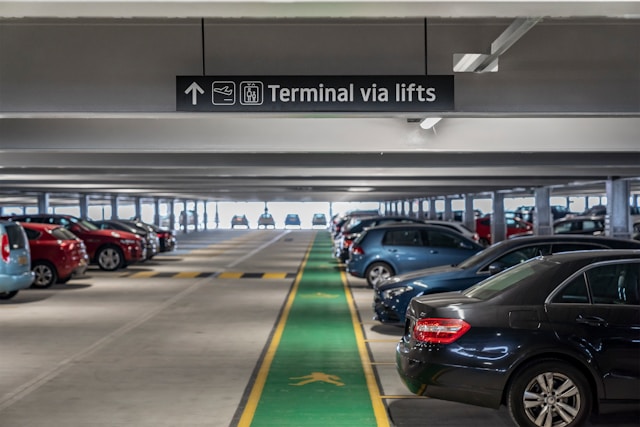
The logistics of getting to and from the airport take on a different character when you travel alone. Every arrangement that requires coordinating with another person is an arrangement that can fall through.
No relying on rides
The classic airport drop-off has a straightforward appeal: someone drives you to the terminal, you get out, the car drives away. But when you travel solo, that someone has to rearrange their schedule around your flight time, which increasingly feels like a significant ask as you get older and everyone around you gets busier. Early morning flights, return journeys at unpredictable hours, and last-minute schedule changes all become your problem to manage rather than someone else's favor to ask for.
Driving yourself and parking your car removes this dependency entirely. You leave when you want to. You return to a vehicle waiting for you rather than waiting for a vehicle. Nobody has to set an alarm on your behalf.
Flexible arrival and departure
Ride-shares and taxis are convenient but they are subject to surge pricing, driver availability, and the kind of timing uncertainty that is particularly stressful when you are trying to make a flight on your own. With your own vehicle in a reserved parking spot, your schedule is your schedule. If you want to leave the house 30 minutes earlier than planned because you are anxious about traffic, you just do that. No coordination required.
On the return side, flight delays are a fact of aviation life. When your flight lands two hours late at 11pm, having a car waiting for you in a lot a shuttle ride away is a considerably better end to a long day than waiting for a surge-priced ride-share in a queue of equally delayed and equally frustrated fellow passengers.
Walking directly to the shuttle
A pre-booked off-site parking spot with shuttle service creates one of the most friction-free airport arrival experiences available to a solo traveler. You park, you lock the car, you get on the shuttle. The shuttle takes you to the terminal. On the return, you get off the plane, collect any checked bags, find the shuttle pickup point, and ride back to the lot. It is a clean, repeatable process that removes improvisation from the equation.
For solo travelers, the value of a repeatable, predictable process cannot be overstated. Predictability is what keeps the airport experience calm.
Packing Tips When You Are Traveling Alone
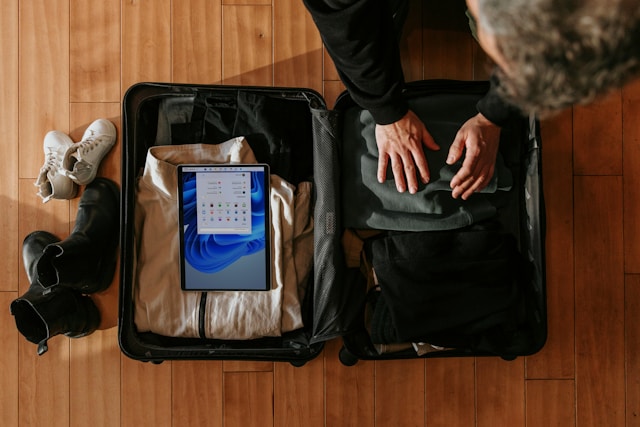
Packing for solo travel is its own discipline, and it rewards anyone who approaches it with some intention.
Carry-on only is the goal. Checking a bag as a solo traveler means waiting at baggage claim alone, managing a larger bag through public transit or a shuttle alone, and introducing the possibility of lost luggage into a trip where you have no one to borrow things from. A well-packed carry-on eliminates all of these issues. The TSA's 3-1-1 liquids rule applies, but beyond that, a 40-liter carry-on bag can comfortably hold a week's worth of clothing with thoughtful packing.
Pack your most important items where you can reach them without opening your main bag. Boarding pass, ID, headphones, a snack, and anything you will want in the first hour of the flight should live in an outer pocket or personal item rather than requiring excavation from a packed carry-on at the gate.
Wear your heaviest or bulkiest items on travel day. Boots, a jacket, and heavier layers all take up disproportionate space in a bag. Wearing them onto the plane instead of packing them can free up a meaningful amount of bag space.
Roll your clothes rather than folding them. This is not a new tip, but it is consistently good advice. Rolling reduces wrinkles and creates more usable space in the bag.
Pack a portable door alarm or door stop if you are staying in budget accommodation or unfamiliar hotels. For solo travelers, particularly those staying alone in shared accommodation or smaller properties, a door alarm is a lightweight and inexpensive addition to a packing list that provides a genuine layer of reassurance.
Bring more chargers than you think you need, or at a minimum a multi-port USB charger and a power bank. As a solo traveler, your phone is your navigation system, your boarding pass, your translation tool, your camera, and your connection to everyone who knows where you are. Keeping it charged is non-negotiable.
Common Mistakes Solo Travelers Make

Even experienced solo travelers fall into patterns that make the airport experience harder than it needs to be.
Leaving home with nothing booked. Winging the airport logistics, parking, transfers, and even check-in might feel liberating but it almost always costs more time and money than having a plan. Solo travel rewards spontaneity once you are at your destination. The airport side of the trip rewards preparation.
Overpacking because there is no one to share the load. The temptation to throw in one more pair of shoes or an extra outfit for every possible occasion is real. The reality of lugging an overweight bag through an airport entirely by yourself, up escalators, onto shuttles, and down terminal corridors, is a fast cure for this habit.
Not saving offline maps and confirmations. Mobile data can be unreliable or expensive internationally, and airport Wi-Fi is not always the stable resource you want it to be. Download your maps, save your confirmations offline, and screenshot anything important before you need it.
Wearing complicated clothing through security. Belt, boots, a jacket with metal hardware, and a watch is a combination that turns a routine security process into a small logistical project. On departure day, wear slip-on shoes, minimal metal, and save the more complex outfits for when you are already at your destination.
Not telling anyone where they are going. This sounds obvious but a surprising number of solo travelers do not share a copy of their itinerary with someone at home. A trusted contact who knows your flight numbers, hotel details, and general schedule is basic travel safety practice that takes about five minutes to set up and provides peace of mind for everyone involved.
Underestimating connection times. Already covered in the planning section, but worth repeating because it is easily the most common and most stressful mistake solo travelers make. Always give yourself more time than you think you need, especially at unfamiliar airports.
Sitting at the wrong gate and not checking the board. Gates change. Flights move. The departure board is not a one-time check. Develop the habit of glancing at it periodically throughout your time at the airport, particularly in the 30 to 60 minutes before boarding begins.
Frequently Asked Questions About Solo Airport Travel
Q: Is it safe to travel alone through airports?
Airports are among the more heavily monitored public spaces in the world. They have security personnel, surveillance systems, and established protocols that make them very safe environments. Solo travelers who practice basic situational awareness, keep their valuables secure, and use official transport services have every reason to travel with confidence.
Q: How early should a solo traveler arrive at the airport?
Two hours before departure for domestic flights and three hours for international flights is the standard recommendation. Solo travelers benefit from adding an extra buffer on top of this, particularly at unfamiliar airports, because there is no companion to manage any part of the check-in and security process while you handle the rest.
Q: What is the safest bag type for solo travel?
Anti-theft crossbody bags and backpacks with features like lockable zippers, RFID-blocking compartments, and cut-resistant straps provide the most practical level of security for airport environments. The goal is a bag that keeps valuables secure without requiring constant active attention.
Q: Is TSA PreCheck worth it for solo travelers?
TSA PreCheck is worth it for almost any traveler who flies more than a couple of times a year. For solo travelers, it is especially valuable because you move through security entirely on your own timeline, without the regular security line theater of removing shoes, unpacking laptops, and managing liquids in front of an impatient queue behind you.
Q: Should solo travelers check bags or carry on?
Carry-on only is the strong recommendation for solo travelers. Checked bags add waiting time, introduce the risk of lost luggage, and create a more difficult physical situation at every stage of the journey when you are managing everything yourself. A well-packed 40-liter carry-on handles most trips comfortably.
Q: How does off-site airport parking work for solo travelers?
You book your spot in advance through a platform like OneStopParking, drive to the off-site facility on departure day, park your vehicle, and take a shuttle to your terminal. On your return, you find the designated shuttle pickup point in the airport, ride back to the facility, and drive yourself home. The whole process is straightforward, typically cheaper than on-site airport parking, and removes the need to coordinate with anyone else.
Q: What should solo travelers do if something goes wrong at the airport?
Go directly to the airline desk or customer service center rather than trying to resolve flight issues through an app while standing in a busy terminal. Keep your travel insurance number saved somewhere accessible, not just in your email. Stay in areas with other people around rather than isolated corners of the terminal. Call someone at home to let them know what is happening. Airport situations that feel catastrophic in the moment almost always have a solution, and staying calm and methodical gets you to that solution faster.
Q: How can solo travelers avoid feeling overwhelmed at large airports?
Download the airport's map before you travel and identify your terminal, gate area, and key facilities in advance. Arrive early enough that you have time to orient yourself without pressure. Give yourself a proper meal before boarding rather than rushing. Noise-canceling headphones change the sensory experience of a large airport dramatically. Large airports are loud, busy, and stimulating environments, and managing that input level makes the whole experience more manageable.