Electric vehicle ownership has changed a lot of things about how people move around. The way you think about fuel. The apps you have on your phone. The mild anxiety that creeps in whenever a road trip takes you somewhere with patchy charging infrastructure. And, as more EV owners are discovering, the way you plan airport parking.
Long-term airport parking with an electric vehicle is not complicated, but it does involve a different set of questions from what a petrol car owner asks. How much charge do you leave in the battery? Does the facility have chargers? What happens to your battery if the car sits for ten days in summer heat or winter cold? Should you top up before you park or when you get back?
This guide answers all of those questions and covers what to look for when choosing a long-term parking facility as an EV driver, including where OneStopParking now lists EV-friendly options near airports across the country.
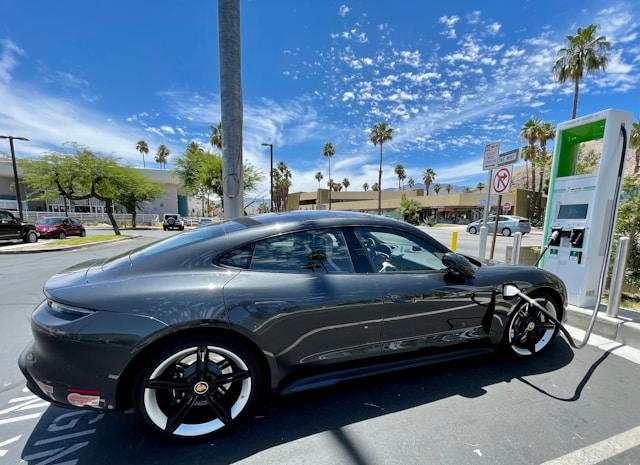
How Long-Term Parking Affects an Electric Vehicle
Leaving any car parked for an extended period has implications. For an EV, those implications are specific enough to be worth understanding before your first long trip.
The most important thing to know is that EV batteries do discharge slowly over time even when the vehicle is not being driven. The rate of self-discharge varies by manufacturer, vehicle model, and battery chemistry, but as a general rule you can expect a fully charged EV to lose somewhere between one and three percent of its charge per week when parked and powered off. Over a ten-day or two-week trip, that adds up, but it is manageable if you go into the trip with the right battery level.
Temperature is the variable that matters most. Extreme heat accelerates battery degradation and increases passive discharge. Extreme cold reduces battery performance and, in some cases, activates the battery thermal management system, which uses stored energy to keep the battery within its optimal temperature range. A car parked in an exposed surface lot in Phoenix in August or Minneapolis in January is working against conditions that a vehicle in a covered structure or a moderate climate would not face to the same degree.
Modern EV battery management systems are designed to protect the battery during extended parking periods, but that protection works best when you set the car up correctly before you leave it.
What Battery Level to Leave Your EV At When Parking Long Term
This is the question most new EV owners ask first, and the answer is more specific than most people expect.
Leaving your EV at 100% charge before a long parking period is not ideal. Lithium-ion batteries, which power the vast majority of consumer EVs on the market, experience more stress when held at maximum charge for extended periods. Most EV manufacturers and battery experts suggest parking for an extended period at somewhere between 50% and 80% state of charge. This range keeps the battery out of the stress zones at both the high and low ends of the capacity curve.
Leaving your battery below 20% before a long parking period is also worth avoiding. If your battery discharges further during the trip, falling below a certain threshold can trigger deep discharge protection, and in extreme cases can cause permanent capacity loss. The 20% to 80% range is where your battery is happiest sitting unused.
Check your vehicle's manual or manufacturer app for specific guidance on your model. Tesla, for example, recommends setting the charge limit to 80% for long-term storage through the app. Rivian, Ford, and other manufacturers have their own specific recommendations that are worth following rather than guessing at.
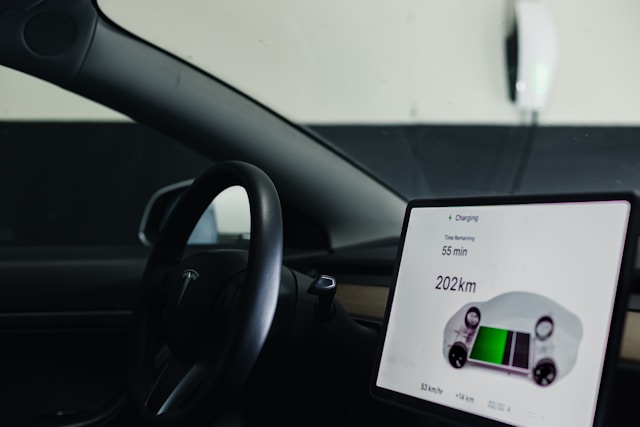
Should You Set Up Your Car Before Leaving It
Yes, and a few minutes of setup before you walk away from your vehicle makes a meaningful difference.
Turn off scheduled charging. If your car is set to charge at a specific time and it is not connected to a charger, the scheduled session will attempt to run and draw on the battery to power ancillary systems. Disable this before you park.
Disable any features that run in the background. Some EVs allow you to set up cabin climate control remotely, activate sentry mode or similar monitoring features, or leave the car in an active connected state that drains the battery faster than a fully offline vehicle. Check which background features your car runs by default and make intentional decisions about which to leave on.
If your vehicle has a long-term storage or transport mode, use it. Several manufacturers offer a specific mode designed for extended periods without charging, which adjusts the battery management system to minimize passive discharge and protect cell health during the parking period.
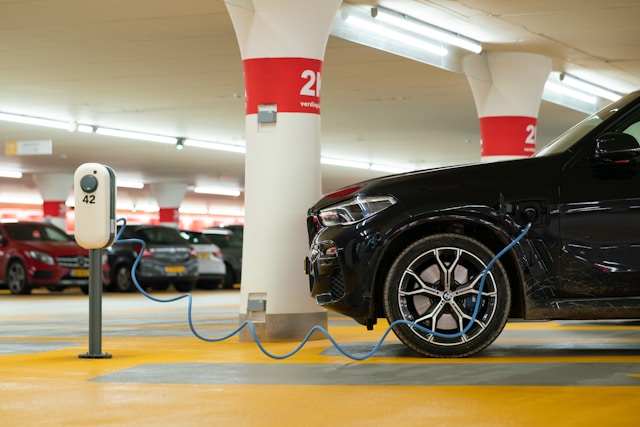
Covered Versus Uncovered Parking for EVs
Covered parking is worth prioritizing for an EV on a long trip, and it matters more than it does for a conventional vehicle.
In hot climates and summer months, a covered structure keeps the battery from sitting under direct sun for days at a time. Battery thermal management systems in many EVs will activate if the battery temperature climbs high enough, drawing on stored charge to cool the pack. A covered space significantly reduces the likelihood of this happening over an extended parking period.
In cold climates and winter months, the benefit runs in the opposite direction. A covered structure, particularly a multi-level parking garage, stays meaningfully warmer than an exposed surface lot overnight. The difference between minus ten degrees on an open lot and plus five degrees inside a structure is enough to affect how hard the battery thermal management system has to work to maintain its operating temperature range.
The cost difference between covered and uncovered long-term parking is often small relative to the parking total on a week or two-week trip. For EV drivers, the covered option is the one worth paying for when it is available.
Charging Before You Park vs. Charging When You Return
The cleaner approach is to park at a facility that has charging available, charge to your preferred long-term storage level at the facility before your flight, and plug back in on your return. This means you come home to a car that is charged to your preferred level rather than calculating how much charge you will have left and whether it will get you home comfortably.
If the facility does not have charging, plan to arrive with somewhere between 60% and 80% charge rather than topping up at 100% immediately before parking. This puts you in the optimal storage range without any additional steps.
On return, if your charge has dropped further than expected, plan for this in your return journey rather than assuming you will have enough to get home. Knowing your approximate charge level at the time of parking, how many days you were away, and the rough expected discharge rate gives you a working estimate. If in doubt, locate a charging option near the airport before your return flight lands so you know exactly where to go if you need a top-up.

What to Look for in an EV-Friendly Long-Term Parking Facility
Not every parking facility is set up equally for EV drivers, and knowing what to look for before you book saves you from discovering something important on the day of departure.
EV charging availability is the most obvious factor. A facility with on-site charging lets you arrive with low charge, plug in while you fly, and return to a topped-up vehicle. Check the type of charger available. Level 2 chargers are standard at most parking facilities that offer EV charging, and they add roughly 20 to 30 miles of range per hour, which is more than enough to replenish typical passive discharge over a week-long trip. DC fast chargers are less common at long-term facilities but provide rapid top-ups if you need to charge significantly before or after your flight.
Check how many charging spots the facility has relative to its overall capacity. A facility with 500 spaces and two charging stations is different from one with 200 spaces and fifteen charging stations. During busy travel periods, demand for the available chargers matters.
A covered structure, as covered above, is worth prioritizing for the battery and climate reasons.
Security and staffing matter for EV owners for an additional reason beyond standard vehicle security. Charging cables left connected to a vehicle have occasionally been disconnected or interfered with at unmonitored facilities. A facility with cameras, perimeter security, and active staffing reduces this risk.
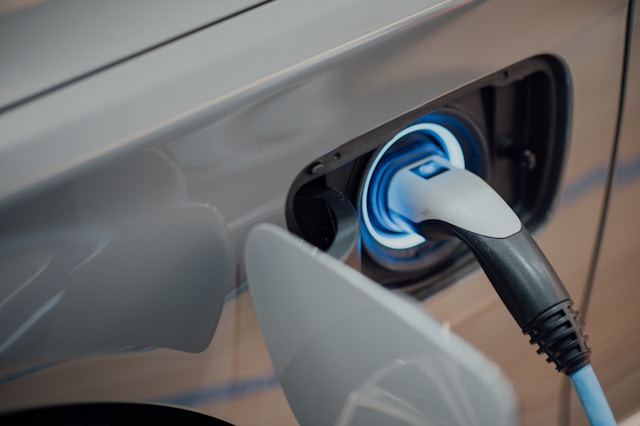
OneStopParking Now Shows EV-Friendly Parking Options
OneStopParking has added EV-friendly facility information to its parking listings, making it straightforward to search for and book parking at facilities that accommodate electric vehicles near your departure airport. You can see this information clearly when comparing options so you know what you are booking before you arrive.
The following facilities across the OneStopParking network currently accommodate EV drivers:
- Hilton St. Louis Airport (STL)
- Grand Hyatt Tampa Bay (TPA)
- Super 8 Chicago O'Hare Airport (ORD)
- Homewood Suites Fort Lauderdale (FLL)
- Houston Hobby Marriott South (HOU)
- Wyndham Grand Executive Center Little Rock (LIT)
- Comfort Suites Nashville Airport (BNA)
- GLo Best Western Nashville (BNA)
- Embassy Suites by Hilton Research Triangle (RDU)
- Best Western Plus Sparks-Reno (RNO)
- Fox Parking San Diego (SAN)
- Aladdin Airport Parking San Diego (SAN)
- Sheraton Suites Old Town Alexandria (DCA)
- Queens Crossing LAZ Parking LaGuardia (LGA)
- PreFlight Airport Parking Atlanta (ATL)
- PreFlight Airport Parking Boston (BOS)
- South Bay Airport Parking 105 Los Angeles (LAX)

Nashville has two options for EV drivers, which is useful for travelers who want to compare price, shuttle frequency, or covered parking availability. San Diego similarly has two EV-friendly options, and the city's moderate climate makes it one of the lower-risk long-term parking environments for EVs regardless of the season.
The Los Angeles option at South Bay Airport Parking sits near LAX, where long-term parking costs can otherwise run high. Having an EV-specific option in that market fills a genuine gap for the large number of EV drivers in the Southern California area.
For Boston and Atlanta, both major hubs with significant EV adoption in their surrounding metro areas, PreFlight Airport Parking covering both cities gives drivers a recognizable and consistent option at two of the country's busiest airports.
The full list continues to grow as OneStopParking adds EV-friendly designations to facilities across its network. Checking the platform at the time of booking gives you the most current picture of what is available near your specific airport.
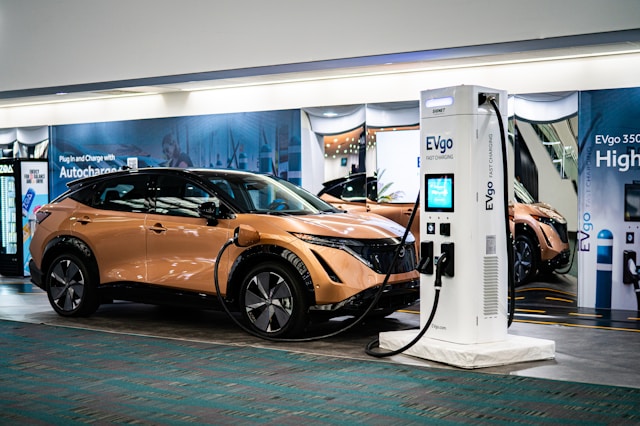
Planning Your EV Airport Trip: A Practical Pre-Departure Checklist
Run through this before you leave for the airport on departure day.
- Check your current state of charge and adjust if needed. If you are significantly above 80%, some EV apps allow you to remotely reduce the charge limit before you arrive at the facility. If you plan to charge at the facility, arriving with less than 80% is fine.
- Confirm the charging spot availability at your booked facility. For facilities with limited EV charging spaces, arriving early in the day or contacting the facility in advance to confirm availability prevents arriving at a full charging bay.
- Set your charging schedule to off or disable any time-based charging settings in the vehicle app.
- Switch on or confirm any storage or transport mode if your vehicle supports it.
- Note your current odometer reading and charge level in your phone before you walk away. Having this information on return makes it easy to compare against what you expect and identify any unexpected issues.
- Take your charging cable if you have a portable Level 1 or Level 2 cable. Some facilities have outlet access but no dedicated EV charger hardware. A portable cable covers this situation.
Frequently Asked Questions About Long-Term EV Airport Parking
Q: Is it safe to leave an electric vehicle in long-term airport parking?
Yes. EVs are safe to leave in long-term parking the same way conventional vehicles are. The main considerations are battery level, temperature exposure, and facility security, all of which you can address through sensible preparation and facility selection. OneStopParking's EV-friendly facility listings include covered and security-monitored options that address the main practical concerns.
Q: How much charge will my EV lose in a week of long-term parking?
Most EVs lose between one and three percent of battery charge per week when parked and powered off in moderate temperatures. Extreme heat or cold can increase this. A vehicle parked for seven days at 70% charge would typically return to somewhere between 65% and 69% in normal conditions. This is enough to drive most EVs a comfortable distance from the airport on return.
Q: Should I charge my EV to 100% before leaving it in long-term parking?
No. Holding a lithium-ion battery at 100% charge for an extended period puts stress on the battery cells. The recommended range for long-term storage is 50% to 80% state of charge. Check your vehicle manufacturer's specific guidance, as the optimal level varies slightly by model and battery chemistry.
Q: Does cold weather damage an EV battery in long-term parking?
Extreme cold does not damage a healthy battery in most modern EVs, but it reduces performance and can activate the battery thermal management system, which uses stored charge to maintain the battery's operating temperature. This increases passive discharge in cold conditions. Choosing a covered parking facility in cold-weather climates reduces temperature exposure and limits how hard the thermal management system has to work.
Q: What type of charger do most EV-friendly long-term parking facilities use?
Most long-term parking facilities with EV charging offer Level 2 AC chargers. These add approximately 20 to 30 miles of range per hour, which is well above what is needed to offset typical passive discharge during a week-long trip. DC fast chargers are less common at long-term facilities but do exist at some locations.
Q: Can I leave my charging cable connected while parked long-term?
This depends on the facility and your comfort level. At a secure, staffed facility with camera coverage, leaving the cable connected is generally fine. At open or unmonitored lots, cable security becomes a consideration. Some EV owners use a cable lock as an additional precaution. If you are charging at a facility with shared charging stations, check whether the facility has a policy on leaving vehicles connected once charging is complete, as occupied chargers in a shared facility can create access issues for other EV drivers.
Q: How do I find EV-friendly airport parking through OneStopParking?
OneStopParking now includes EV-friendly designations on facility listings across its network. When searching for parking at your departure airport, look for the EV indicator in the facility details. The platform lists seventeen EV-friendly locations across airports including LAX, ATL, BOS, ORD, TPA, DCA, LGA, RDU, and others, with the network continuing to expand.
Q: What happens if I return from my trip and my EV battery is too low to drive home?
If your battery has discharged more than expected, the most practical step is to top up at a charging station near the airport before starting your journey home. Most EV navigation apps and mapping services include real-time charging station locations, so identifying the nearest option to your parking facility before your return flight lands gives you a plan ready to go. For travelers who book EV-friendly facilities with on-site charging through OneStopParking, this situation is much less likely, since the vehicle can charge during the trip.