There is a generation of travelers who remember airports differently. Not better in every way, not simpler exactly, but different in a specific detail that mattered more than people realized at the time: you could walk someone you loved all the way to their gate. You could wait at arrivals inside the terminal, right at the door of the jetbridge, and be the first face they saw when they stepped off the plane. You could carry a full water bottle from home without a second thought.
Then came September 11, 2001, and all of that changed in ways that became so normalized over the following 25 years that most travelers under 35 have never known anything different. The security checkpoint became the hard border between the airport's public and private worlds, and everything that used to happen beyond it became memory.
The TSA is now walking some of that back. Not all of it, and not without conditions, but the direction of travel is clear: after a quarter century of post-9/11 security protocol, the rules that govern what you can bring to the airport and who can come with you are starting to shift. Here is what is changing, what it means in practice, and why it is happening now.
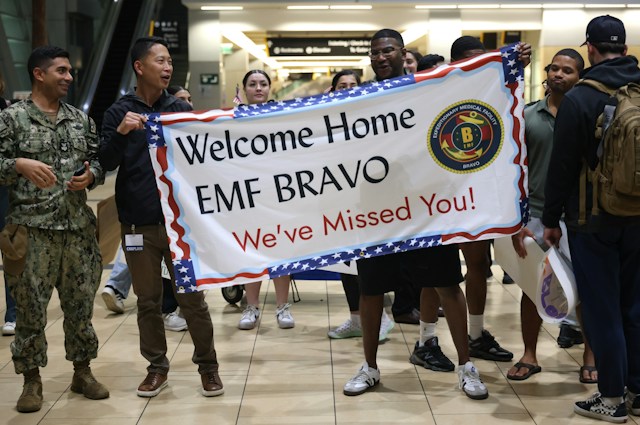 Image by navymedicine
You Can Take Someone to the Gate Again
The most emotionally resonant of the new changes is also the most straightforward. The TSA has announced that individuals without airline tickets will be able to pass through security and accompany travelers to airport gates. The program, called Gateside TSA PreCheck, launches at 13 US airports and is available to travelers and their guests who participate in TSA PreCheck or hold a Known Traveler Number.
- Mesa Gateway Airport (AZA) in Arizona
- John Glenn Columbus International Airport (CMH) in Ohio
- Dallas Fort Worth International Airport (DFW) in Texas
- Detroit Metropolitan Wayne County Airport (DTW) in Michigan
- Wichita Dwight D. Eisenhower National Airport (ICT) in Kansas
- Indianapolis International Airport (IND) in Indiana
- Harry Reid International Airport (LAS) in Nevada
- Los Angeles International Airport (LAX) in California
- Bill and Hillary Clinton National Airport (LIT) in Arkansas
- Will Rogers International Airport (OKC) in Oklahoma
- Eppley Airfield (OMA) in Nebraska
- San Diego International Airport (SAN) in California
- Salt Lake City International Airport (SLC) in Utah
The process requires an online application submitted one to three days before the planned visit. This is not a walk-up policy. You apply in advance, and the pre-approval requirement keeps it within the framework of the existing trusted traveler infrastructure rather than opening the gates to anyone who shows up at the checkpoint.
The TSA described the intent behind the program directly on its website: "This new program makes it easier to return to the gate for welcomes and send-offs, meet friends during a layover, and enjoy dining and shopping along the way, bringing back the moments that once defined air travel."
For anyone who has ever watched a parent try to put on a brave face at the security checkpoint because they cannot walk their child to the gate, or who has arrived home from a long trip and been met by family in the chaotic arrivals hall rather than at the door of the plane, this change lands with a weight that goes beyond airport logistics.
 Image by Ketut Subiyantu
Water Bottles Might Be Coming Back Through Security Too
Alongside the gate visitor program, the Trump administration is also reportedly considering allowing TSA PreCheck passengers to carry full water bottles through airport security checkpoints, according to US media reports. The TSA did not confirm this to the BBC when asked, but the direction of the conversation is visible.
The liquid restriction that would be partially reversed has been in place since 2006, when UK authorities foiled a terrorist plot in which individuals planned to smuggle liquid chemical mixtures aboard aircraft inside soft drink and sports drink bottles. The 3-1-1 rule that followed, liquids in containers of 3.4 ounces or less, in one quart-sized clear bag, one bag per passenger, became one of the most universally recognized and widely cursed features of airport security worldwide.
The potential change for PreCheck travelers would not eliminate the liquid rule entirely. But allowing pre-approved travelers with Known Traveler Numbers to carry a full water bottle through the checkpoint would make a meaningful practical difference to the daily experience of the millions of Americans who hold PreCheck status.
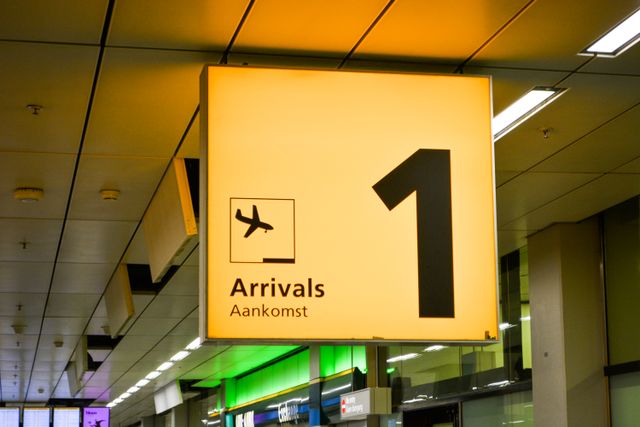 Image by Harm Jakob Tolsma
Why Now?
The obvious question behind both of these changes is why they are happening after 25 years rather than at some earlier point. Jeff Price, an aviation security expert and professor at Metro State University Denver, gave the BBC a clear answer: the technology has caught up.
The TSA is currently replacing traditional X-ray machines at security checkpoints with computed tomography scanners, the same technology used in medical CT imaging. These machines produce detailed three-dimensional images of bag contents and, critically, can do a substantially better job of detecting liquid-based explosives than the X-ray equipment they replace.
"These newer security machines that TSA is installing can do a much better job of detecting liquid-based explosives," Price told the BBC. When the machines can see more clearly what is inside a container, the blanket prohibition on liquids above a certain volume becomes less necessary as a compensating measure.
The same logic applies to the gate visitor program. The post-9/11 decision to restrict airport access to ticketed passengers was partly about reducing the volume of people that security officers had to screen. "It keeps the lines moving and allows us to focus more on the travelling passenger," Price said. Improvements in screening technology, combined with the existing infrastructure of pre-approved trusted traveler programs, make it possible to extend controlled access beyond the checkpoint without the same strain on screening resources that it would have created in 2001.
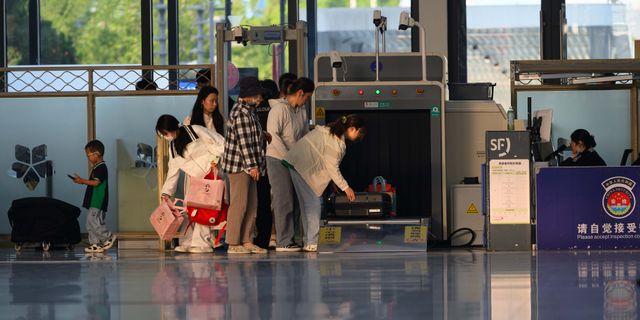
Photo by 海风 张
Shoes Are Already Off the List
The gate visitor and water bottle changes follow a move the TSA made last year that also attracted significant attention: ending the requirement for passengers to remove their shoes during security screening. That policy had been in place for two decades following the 2001 shoe bomb attempt by Richard Reid, and its removal was widely welcomed by travelers who had spent twenty years padding through airport security in their socks.
Taken together, the shoe removal end, the gate visitor program, and the potential water bottle change represent the most substantial rollback of post-9/11 airport security restrictions in the history of those restrictions. All three changes are enabled by the same underlying driver: screening technology has improved to the point where the compensating behaviors that passengers were required to perform are no longer necessary to maintain security effectiveness.
What the Reaction Has Looked Like
Public response to the announcements has reflected the generational divide you might expect. Older travelers who remember pre-9/11 airports have largely welcomed the changes as a return to something that was taken away rather than a loosening of standards. Younger travelers, who have known nothing other than the post-9/11 checkpoint experience, have been more skeptical, with some questioning whether the changes signal a decline in safety.
Price acknowledged both reactions without dismissing either. "People have a nostalgia for a pre-9/11, it's a calling back to a normal world, and I can see that part of it. I can see people wanting to get back to something that they feel more comfortable with, which was a pre-9/11 world."
On the safety question, his position was clear. The changes are justified by technology improvements, not by a reduced assessment of the threat environment. "I don't want to compromise valid security measures simply for a nostalgic feeling before 9/11. I don't think we should make those types of decisions so that we feel better. We can make those types of decisions as long as the security measures are not compromised, and that's always what I look for in these situations."
That framing is the important one. These changes are not the TSA deciding that airport security matters less than it did. They are the TSA determining that better technology means certain passenger-facing restrictions are no longer doing the security work they were designed to do.
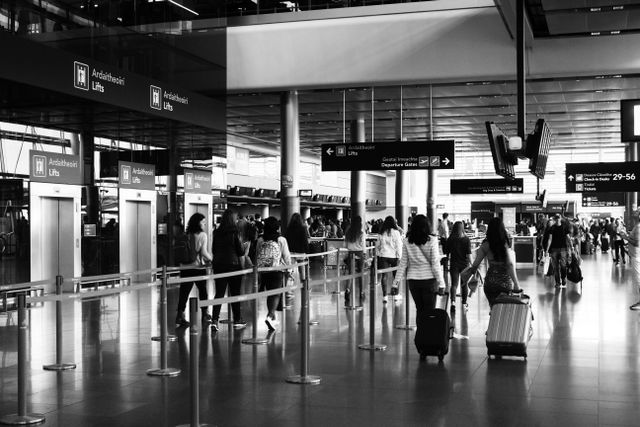
Photo by Philippe Bonnaire
What This Means for Your Next Trip
If you hold TSA PreCheck, the practical implications are meaningful and will become more so as the programs scale.
The Gateside TSA PreCheck program launches at 13 airports. If you want to bring a non-traveling family member or friend through security to the gate, you apply online one to three days before the visit. Both you and your guest need to go through the PreCheck lane. The guest does not need their own PreCheck membership, but you do.
On the water bottle question, nothing is confirmed yet. If the change proceeds, it would apply to PreCheck travelers and would mark the end of one of the most universally complained-about features of the airport experience for the roughly 20 million Americans who currently hold PreCheck status.
Shoe removal is already done. You can keep your shoes on at PreCheck lanes as of last year.
For travelers who do not yet hold TSA PreCheck, the timing has never been better to apply. The program currently costs $78 for five years and includes expedited screening, no shoe removal, no laptop removal, and no liquids bag requirement. The new gate visitor benefit adds another layer of value on top of that, and the potential water bottle change would add another still. The program's practical advantages are expanding at the same time as its cost remains the same.
Frequently Asked Questions About the New TSA Policy Changes
Q: What is the Gateside TSA PreCheck program?
Gateside TSA PreCheck allows individuals without airline tickets to pass through airport security and accompany travelers to the gate. It is available to people who hold TSA PreCheck status or a Known Traveler Number and requires an online application submitted one to three days before the planned visit. The program is currently launching at 13 US airports.
Q: Do non-ticketed gate visitors need their own TSA PreCheck membership?
The program is tied to the PreCheck or Known Traveler Number of the ticketed traveler in the group. Check the TSA's official Gateside PreCheck application process for current requirements, as the specific eligibility rules for accompanying guests are part of the application process detail.
Q: Which airports currently offer the Gateside TSA PreCheck program?
The program is launching at 13 US airports. The TSA is publishing the specific airport list through its official channels. Check tsa.gov for the current list of participating airports.
Q: Is it confirmed that full water bottles will be allowed through TSA security?
Not yet. US media reports indicate the Trump administration is considering allowing TSA PreCheck travelers to bring full water bottles through security, but the TSA had not confirmed this as an official policy change at the time of writing. Follow TSA's official communications for updates.
Q: Why is the TSA reversing these post-9/11 policies now?
Improvements in airport screening technology, specifically the replacement of traditional X-ray machines with computed tomography scanners, have improved the ability to detect threats in luggage and on passengers. This makes some of the compensating restrictions that were put in place to offset older technology's limitations less necessary to maintain security effectiveness.
Q: Does removing shoes at security still apply?
For travelers using standard security lanes, shoe removal policies may still apply depending on the airport and the specific checkpoint. TSA PreCheck travelers no longer need to remove their shoes, a change that took effect last year. Check with your specific airport and lane for current requirements.
Q: Does getting TSA PreCheck make sense given these changes?
TSA PreCheck costs $78 for five years, which works out to roughly $16 per year or $1.30 per month. The program currently includes expedited screening, no shoe removal, no laptop removal, and no liquids bag requirement. The Gateside program extends that to gate visitor access. If the water bottle change is confirmed, it would add further practical benefit. For any traveler who flies more than two or three times a year, the cost-to-benefit calculation is straightforward.
Q: Will these changes make airports less safe?
Aviation security experts have assessed the changes as technology-driven rather than safety-compromising. The core security measures and screening standards remain in place. The changes remove passenger-facing requirements that were compensating for older technology limitations, not the fundamental security architecture that protects flights. As Price noted, the critical condition is that core security measures are not compromised, and the TSA's position is that improved screening technology makes these specific restrictions no longer necessary to maintain those standards.