Minneapolis-St. Paul International Airport (MSP) has long held a reputation as one of the most efficient and passenger-friendly hubs in the United States. Consistently ranked at the top of JD Power and Associates’ satisfaction surveys, the airport serves as a vital gateway for the Upper Midwest. However, being a premier global hub in a climate defined by extreme seasonality requires more than just efficient runways; it requires constant evolution.
In recent months, MSP has undergone a dramatic transformation, balancing a massive multi-million dollar architectural overhaul with the perennial challenge of Minnesota’s formidable winter weather. For the modern traveler, navigating this landscape requires a blend of appreciation for world-class design and strategic planning to outsmart the elements.
The Architectural Renaissance: Terminal 1’s $242 Million Facelift
For years, Terminal 1 (Lindbergh) was a reliable, if slightly dated, testament to 20th-century aviation. That changed with the completion of a massive interior renovation project aimed at unifying the terminal’s aesthetic and improving the psychological flow of the passenger journey. This wasn’t merely a cosmetic upgrade; it was a structural reimagining of how travelers interact with the space.
The Metropolitan Airports Commission (MAC), in partnership with Delta Air Lines, invested over $240 million to modernize approximately 1.1 million square feet of space. The renovation, which focused heavily on the ticketing and bag claim levels as well as the concourses, was designed to bring a "North Star" elegance to the facility.
Key Features of the Renovation
- A Unified Aesthetic: The project replaced fragmented designs with a cohesive palette of warm wood tones, sleek metals, and expansive glass. The goal was to eliminate the "clutter" of old airport design, replacing it with streamlined wayfinding and brighter environments.
- Expanded Gate Areas: One of the primary complaints of modern air travel is the "gate squeeze." MSP addressed this by reconfiguring gate holdrooms, adding more square footage, and installing thousands of new seats equipped with integrated power outlets and USB ports.
- Sustainable Infrastructure: Beyond the surface, the renovation integrated LED lighting systems and high-efficiency HVAC components, significantly reducing the terminal's carbon footprint while improving air quality and illumination.
- The Concourse G Expansion: As a crown jewel of this phase, Concourse G saw a dramatic widening. This allowed for not only more seating but also a more sophisticated array of local retail and dining options, reflecting the culture of the Twin Cities.
According to airport officials, the design philosophy was "stress reduction through clarity." By using natural light and intuitive pathways, the airport aims to lower the cortisol levels of passengers before they even reach the security checkpoint.
The Winter Reality: Managing the Logistics of Snow at MSP

While the interior of MSP may now feel like a high-end boutique hotel, the exterior remains at the mercy of the Minnesota elements. MSP is home to some of the world’s most advanced snow-removal teams, often clearing runways in under 20 minutes, but even the best technology has its limits when a true "clipping" system or a heavy Upslope storm hits the region.
Recent winter patterns have reminded travelers that "on-time" is often a relative term in the North. When heavy snowfall or ice accumulation exceeds the rate of removal, the Federal Aviation Administration (FAA) frequently implements Ground Delay Programs (GDP).
What Happens During a Snow Event at MSP?
When a storm hits the airport doesn't just "shut down." Instead, it enters a state of high-stakes logistics.
- De-Icing Bottlenecks: Every aircraft must be treated with Type I (de-icing) and Type IV (anti-icing) fluids. This process, while vital for safety, adds significant time to the departure queue.
- Runway Braking Action Reports: Pilots rely on Mu-values (a measure of friction) to determine if it is safe to land. If the friction levels drop too low, arrivals are halted until the "Snow Avengers" (MSP’s fleet of multi-function plows) can sweep the tarmac.
- Cancellations and Ripple Effects: Because MSP is a major hub for Delta, a delay in Minneapolis can cause a domestic "domino effect," delaying flights in Atlanta, New York, and Los Angeles.
For the passenger, these delays represent more than just a late arrival; they represent a test of patience. Late December saw delays of around 4-hours with close to 200 flights either canceled or delayed.
The gravitas of a Minnesota winter means that safety will always supersede the schedule. Travelers are encouraged to monitor METAR reports and airline apps closely, as a "Ground Stop" can be issued in minutes.
Park, Stay, Fly at MSP: The Hyatt Regency Bloomington Solution
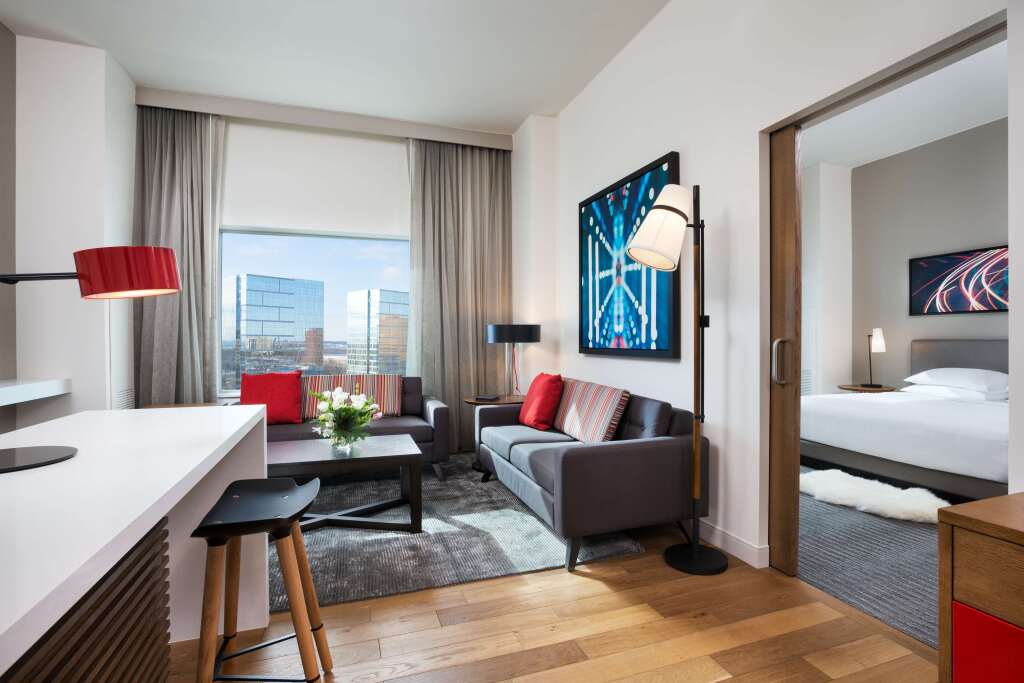
Given the dual realities of MSP (a beautiful, renovated destination and a hub prone to winter volatility) the "savvy traveler" has moved away from the traditional "drive-and-park" model. The high cost of terminal parking (which can exceed $30 a day) combined with the stress of navigating snowy highways during a 4:00 AM commute has led to the rise of the "Park Stay Fly" strategy.
This is where the Hyatt Regency Bloomington-MSP comes into play. Positioned as a premier lodging option just minutes from the airport perimeter, it offers a logistical sanctuary for those looking to avoid the chaos of a travel day.
Why the Park Stay Fly Model Works
- Risk Mitigation: By arriving the night before your flight, you effectively eliminate the risk of a morning snowstorm preventing you from reaching the airport. You wake up five minutes away from the terminal rather than an hour away in a suburban driveway.
- Financial Sanity: Terminal parking for a week can easily cost $200 or more. By utilizing a "Park Stay Fly" package through OneStopparking, travelers often find that the cost of a luxury hotel room plus parking is lower than the cost of parking alone at the airport.
- The Experience: The Hyatt Regency Bloomington offers a high-end atmosphere that complements the newly renovated Terminal 1. With sophisticated dining and a quiet environment, it allows the vacation or business trip to start 24 hours early.
The process is remarkably simple: you book your stay and parking through the OneStopParking portal, check in, enjoy the amenities, and take a dedicated shuttle directly to the newly renovated Lindbergh or Humphrey terminals. Your car remains in a secure, monitored location, and you avoid the "shiver and search" routine of finding your vehicle in a massive airport ramp upon your return.
A New Standard for the Twin Cities
Minneapolis-St. Paul International Airport is currently in its "Golden Era." The $242 million investment has successfully elevated the passenger experience to meet the demands of the 21st century, offering a space that is as aesthetically pleasing as it is functional. However, the geographic reality of the Twin Cities means that weather will always be a factor in the travel equation.
Whether you are marveling at the new terrazzo floors in Concourse G or watching the snow plows clear the way for your next adventure, one thing is certain: MSP is ready for its close-up, rain, shine, or blizzard.