July 1 is Canada's birthday, and if you have never been in Canada on Canada Day, you are sorely missing something. This is a country that typically plays things pretty cool on the world stage, but on July 1, Canadians drop the understated routine and go all in. Red and white everywhere. Fireworks over rivers and harbors. Parades through town centers that have been going for decades. Free concerts on lawns outside the parliament buildings. New citizens taking their oath of citizenship in the open air while the crowd around them cheers. It is, frankly, a wonderful thing to witness.
Canada Day 2026 marks the country's 159th birthday, and whether you are Canadian planning to celebrate at home or a visitor looking for a reason to finally make the trip north, this guide covers what the holiday actually is, how it gets celebrated, and exactly where you should be on July 1.
What Is Canada Day?
Canada Day commemorates the anniversary of Canadian Confederation, which took effect on July 1, 1867. That was the day the British North America Act united the Province of Canada, New Brunswick, and Nova Scotia into a single dominion within the British Empire. It was not full independence from Britain in the modern sense, but it was the founding moment of Canada as a distinct political entity, and the date has anchored a national celebration ever since.
For its first 115 years, the holiday went by a different name: Dominion Day, a title that reflected Canada's status as a dominion of the British Empire. In 1982, through an amendment to the Holidays Act, the government renamed it Canada Day. The timing felt right. That same year, Canada patriated its constitution, a significant milestone in Canadian sovereignty that gave the new name an even weightier context. Canada Day stuck immediately, and now it is simply what Canadians call their national birthday.
In 2026, Canada turns 159. And with the World Cup in the country’s front yard, things are bound to get exciting!
How Do Canadians Actually Celebrate Canada Day?
The honest answer is in a lot of different ways, depending on where you are. Canada is an enormous country with strongly distinct regional identities, and the way Calgary celebrates Canada Day is not quite the same as how a small town in New Brunswick does it, which is not quite the same as what happens on Parliament Hill in Ottawa. But a handful of traditions show up almost everywhere on July 1.
Red and white is the universal dress code. The Canadian flag colors appear on everything: t-shirts, face paint, bandanas, maple leaf hats that tourists buy and Canadians wear earnestly and without any embarrassment on this particular day. It is one of the more wholesome expressions of national pride you will encounter anywhere in the world.
Fireworks are non-negotiable. Every major city and most small towns put on a fireworks show on the night of July 1. Some of the best displays in the country happen in smaller communities where the fireworks feel closer, and the crowd feels more intimate than anything you find in a big-city park.
Parades roll through cities and towns across the country. Some of these parades have been running continuously for decades, with local schools, community groups, veterans, and marching bands turning out year after year. They feel genuinely communal in a way that large televised events rarely do.
Citizenship ceremonies might be the most distinctly Canadian part of Canada Day that most visitors do not expect to encounter. On July 1, new Canadians take their oath of citizenship at events held across the country, and some of the most memorable ceremonies happen outdoors in front of large crowds. Watching someone become Canadian on Canada Day, of all days, is the kind of thing that gets to people more than they anticipated. It brings a layer of real meaning to the celebration that sits alongside the concerts and the fireworks.
Barbecues, picnics, and waterfront gatherings round out the day for Canadians who are not attending a formal event. Canada in July is beautiful, the days are long, and getting outside is reason enough.
Where to Go for Canada Day 2026

Ottawa, Ontario: The National Capital Celebration
If you want to understand what Canada Day means at its most symbolic and celebratory, Ottawa is where you go. The national capital celebration on Parliament Hill is the most prominent Canada Day event in the country, organized each year by the Department of Canadian Heritage. Parliament Hill is free and open to the public on July 1, and it fills with an enormous crowd for a full day of programming.
The celebration traditionally runs across two main shows: an afternoon show and an evening show, with the evening culminating in a fireworks display over the Ottawa River. Parliament Hill as a backdrop for fireworks is a genuinely dramatic setting. The buildings are Gothic Revival limestone, floodlit on a summer night, with bursts of color reflecting off the river below. It is the kind of visual that photographs never quite capture accurately.
The National Arts Centre, sitting just down the street from the Hill, gets involved in the day's programming each year. The ByWard Market, a historic market district just east of Parliament Hill, buzzes with visitors throughout the day and into the night. If you want a BeaverTail, Ottawa's famous fried dough pastry that has become practically synonymous with national capital tourism, July 1 in ByWard Market is your moment.
Citizenship ceremonies also take place on Parliament Hill on Canada Day, which layers the event with a meaning that goes well beyond the entertainment.
This year’s event will include performances by the likes of Alessia Cara, Loud, TOBi, Naomi, and several other Canadian treasures.
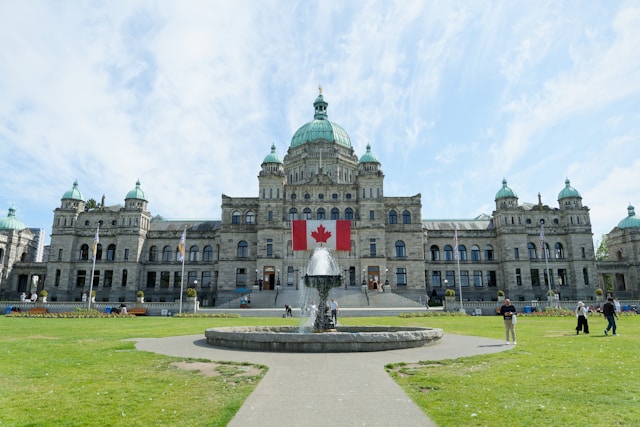
Victoria, British Columbia: Canada Day at the Inner Harbour
Victoria on Canada Day surprises a lot of first-time visitors. The city has a reputation for being the most British city in Canada, with its Victorian architecture, afternoon tea culture, and general air of genteel reserve. None of that applies on July 1. Victoria goes full Canada Day, and it does so with massive enthusiasm.
The Inner Harbour is the heart of the celebration, with entertainment, food vendors, and a festive energy that builds throughout the day. The harbor setting is gorgeous, with the Fairmont Empress Hotel and the BC Legislature building as your constant backdrop. Fireworks launch over the water in the evening, and the reflection on the harbor makes the whole display feel twice the size.
Victoria consistently puts on one of the most enthusiastically attended Canada Day celebrations in the country on a per-capita basis. The city has a strong local crowd that turns out in full red and white, and the Inner Harbour acts as a natural gathering point that keeps the atmosphere concentrated and lively rather than spread thin. If you have not been to Victoria before, Canada Day gives you a genuinely compelling reason to go.

Toronto, Ontario: A City With Multiple Celebrations
Toronto approaches Canada Day the way Toronto approaches most things: with multiple options spread across a very large city, each of which could comfortably stand as its own major event. There is no single national capital-style gathering point, but there is a great deal happening.
Centennial Park in Etobicoke has hosted one of the city's anchor Canada Day events, drawing big crowds to the west end of the city for live entertainment, activities, and fireworks. Mel Lastman Square in North York has historically hosted Canada Day programming as well. Harbourfront Centre on the downtown waterfront runs events that take full advantage of the Lake Ontario setting, and Mississauga, just west of the city boundary, holds its own strong celebration.
At Nathan Phillips Square, you can jump into Skills & Drills on the mini pitches throughout the evening and catch the FIFA World Cup Round of 32 game live broadcast on the mainstage starting at 8 p.m.
What makes Toronto particularly interesting for Canada Day is the sheer diversity of the city. The holiday feels genuinely multicultural here, with new Canadians and long-time Canadians celebrating side by side in a way that reflects something true about what Canada Day actually represents.
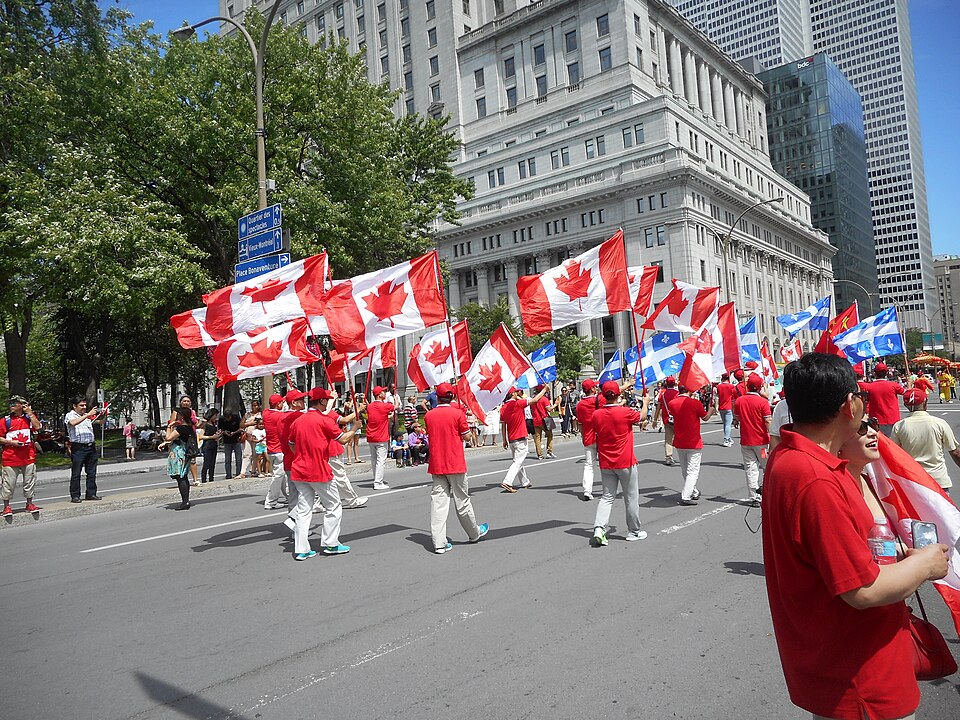
Montreal, Quebec: A City That Knows How to Have a Good Time
Montreal in summer is already one of the best places to be in North America. The city is in full festival mode throughout June and July, and Canada Day lands right in the middle of all of it.
The Old Port of Montreal, the Vieux-Port, is one of the prime spots for Canada Day celebrations, with the waterfront setting along the St. Lawrence River providing a natural backdrop for outdoor events. The area is lively in summer under normal circumstances, but July 1 draws a particularly large and festive crowd.
There is one thing worth knowing if you plan to be in Montreal on Canada Day: July 1 is also Moving Day in Quebec. The majority of residential leases in the province end on June 30, which means about 100,000 people move apartments on July 1. It creates a surreal parallel reality where half the city is watching fireworks and the other half is hauling furniture down staircases. If you are in Montreal on Canada Day, you will probably witness this. It is chaotic, confusing, and thoroughly Montreal.
Beyond the organized celebrations, Montreal's food scene, bar culture, and general city energy make it a fantastic place to spend Canada Day even if you never attend a specific event. The city generates its own celebration atmosphere organically.

Vancouver, British Columbia: Fireworks on the Pacific Waterfront
Vancouver celebrates Canada Day with the Pacific mountains as a backdrop, which is not a subtle detail but an entirely justified one. Canada Place, the iconic sail-roofed structure on the downtown waterfront, is one of the focal points for celebrations, with the North Shore mountains sitting across Burrard Inlet in full summer clarity.
The city hosts fireworks over the water in the evening, and various neighborhoods around Vancouver run their own community events throughout the day. Granville Island, the public market island tucked under the Granville Bridge, is a natural gathering point in summer and feels especially alive on July 1.
For something a bit different, Steveston Village in Richmond, just south of Vancouver, holds one of the Lower Mainland's most beloved Canada Day celebrations. The event features a parade, a community salmon barbecue, and a neighborhood festival atmosphere that has been going strong for years. If you want the feeling of a classic small-town Canada Day within easy reach of a major city, Steveston is one of the best options in the country.
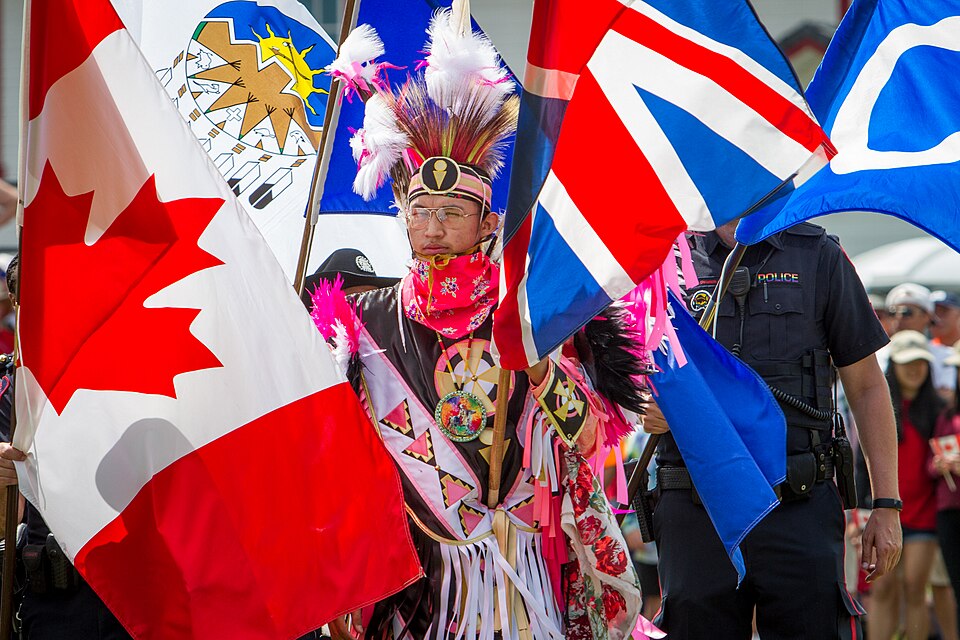
Calgary, Alberta: Canada Day Before the Stampede
Calgary brings its own particular energy to July 1. The city is best known internationally for the Calgary Stampede, which in 2026 runs from July 3 to July 12, launching just two days after Canada Day. If you plan your trip right, you can celebrate Canada's birthday on July 1 and stay for the Stampede, which is one of the largest outdoor festivals in the world and genuinely worth building a trip around.
Prince's Island Park, a green island park in the Bow River right in downtown Calgary, is one of the city's most popular Canada Day gathering spots. The park is one of Calgary's most pleasant urban spaces at any time of year, and on July 1 it fills with Calgarians who have taken the day off to be outside. The combination of river setting, mountain views in the distance, and a general summer holiday atmosphere makes it a lovely place to be.
Halifax, Nova Scotia: East Coast Energy
Halifax does Canada Day with an East Coast warmth that is hard to replicate anywhere else in the country. The city's waterfront, the harbor view across to Dartmouth, and the Maritime enthusiasm for any occasion involving good weather and live music make July 1 a lively time in the Nova Scotia capital.
The Halifax Waterfront along Halifax Harbour has hosted Canada Day celebrations with live entertainment and fireworks over the water. The city's bar and live music scene, already one of the more vibrant ones in Canada relative to its size, kicks up a gear on national holidays.
If you have never visited Atlantic Canada, Canada Day is a perfectly good excuse to finally go. Halifax is a charming and walkable city, the seafood is excellent, the people are welcoming in a way that feels unperformative, and the East Coast version of summer has a particular quality to it that is genuinely different from what you find further west.
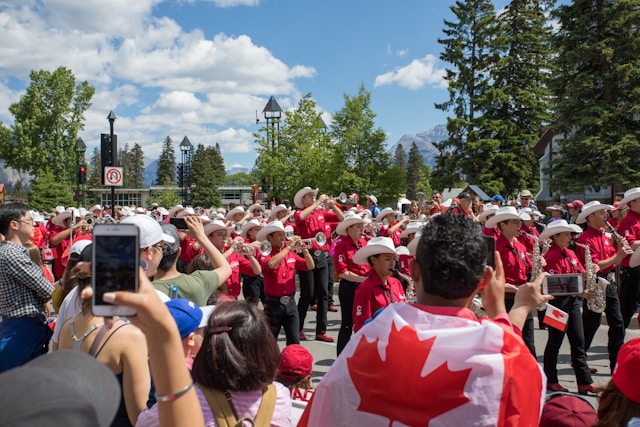
Banff, Alberta: Canada Day in the Mountains
For something that no city celebration can match, Banff National Park on Canada Day is a bucket-list experience. Banff townsite sits inside Canada's oldest national park, surrounded by the Rocky Mountains, and on July 1 the town holds its own Canada Day celebrations that combine mountain scenery with a local parade, live music, and community festivities that feel a long way from the big-city crowds.
The Canadian Rockies in July are at their most dramatic. Snow still sits on the high peaks, the rivers run fast with glacial melt, and the light lasts until well into the evening. Watching fireworks in that setting, with mountain silhouettes against a late summer sky, is the kind of memory that stays with you.
Banff and the surrounding area are extremely popular in summer, and accommodation fills up far in advance. If Banff is on your Canada Day 2026 radar, start looking at lodging options early in the new year rather than leaving it to the last minute.
A Few Things Worth Knowing Before You Go
Canada Day is a federal statutory holiday, which means banks, government offices, and many businesses close on July 1. Restaurants, attractions, and tourist-facing businesses generally stay open, but checking ahead with any specific venues you plan to visit is always worth doing.
The weather on July 1 varies dramatically depending on where in Canada you are. Halifax might be cool and foggy. Ottawa and Toronto will likely be warm and humid. Calgary can swing between brilliant sunshine and a sudden prairie thunderstorm within the same afternoon. Vancouver is usually mild. Banff mornings can be cold even in July. Packing a layer is wise regardless of where you are headed.
In major cities, public transit runs extended hours on Canada Day to handle the crowds that fireworks shows generate. Getting to and from evening events by transit is almost always faster and easier than driving. Parking near major event areas fills up hours before showtime.
Canada Day 2026 falls on a Wednesday, July 1. That mid-week placement means the weekend before July 1 functions as a pre-celebration for many cities, with programming often starting as early as June 27 or 28. When you are planning your trip, check what is happening in the days leading up to July 1 as well, because you may find you want to arrive earlier than you originally planned.
One more thing worth putting in your calendar if you are already planning to be in Canada around July 1. The FIFA World Cup 2026 brings two knockout stage matches to Canadian soil on Thursday, July 2, which means the Canada Day celebrations roll almost directly into World Cup football.
BMO Field in Toronto hosts Match 83, a Round of 32 clash between the Group K runners-up and the Group L runners-up. On the same day, BC Place in Vancouver hosts Match 85, with the Group B winners taking on a third-place qualifier from Groups E, F, G, I, or J. If your Canada Day trip takes you to either Toronto or Vancouver, staying an extra day to catch a World Cup match is not just a good idea, it borders on mandatory.
The 2026 World Cup is the first to use the expanded 48-team format, the first to be co-hosted across three countries, and the first time Canada has hosted World Cup matches since 1994. Tickets go through FIFA's official channels, and given the demand this tournament has already generated, securing them sooner rather than later is strongly advisable.
Frequently Asked Questions About Canada Day
Q: What is Canada Day and why is it on July 1?
A: Canada Day marks the anniversary of Canadian Confederation, which took effect on July 1, 1867. On that date, the British North America Act united three British colonies into a single dominion, creating Canada as a distinct political entity. Canadians celebrate July 1 as their national birthday the way Americans celebrate July 4, with fireworks, parades, concerts, and a collective acknowledgment of the country's founding moment.
Q: How old will Canada be on Canada Day 2026?
A: Canada turns 159 years old on July 1, 2026, counting from Confederation in 1867.
Q: What was Canada Day called before it was renamed?
A: The holiday went by the name Dominion Day from 1867 until 1982, reflecting Canada's original status as a dominion of the British Empire. An amendment to the Holidays Act in 1982 officially renamed it Canada Day.
Q: Is Canada Day a public holiday?
A: Yes. Canada Day is a federal statutory holiday observed across all provinces and territories. Government offices, banks, and most public institutions close on July 1. Tourism, hospitality, and retail businesses typically remain open.
Q: What is the best city to visit for Canada Day?
A: Ottawa offers the most symbolically significant celebration, with the national event on Parliament Hill organized by the federal government and free to attend. Victoria earns consistent praise for its Inner Harbour atmosphere and community energy. Banff offers something no city can replicate. The best choice depends entirely on what kind of experience you are looking for.
Q: Do Canada Day events cost money to attend?
A: Most major public Canada Day events are free. The Parliament Hill celebration in Ottawa, Victoria's Inner Harbour events, and public fireworks shows across the country cost nothing to attend. Ticketed experiences such as dinner cruises, private venue events, and some concerts require advance booking. Check individual event listings for 2026 as programming gets announced in spring.
Q: What should visitors wear to Canada Day celebrations?
A: Red and white. Canadians take this seriously in the most cheerful way possible, and visitors who show up in the national colors get a warm reception. Beyond the patriotic color scheme, dress for the weather at your specific destination. Summer evenings in Canada can cool down quickly after sunset, so bringing a layer is a sensible move no matter where you are.
Q: Is Canada Day a good time to visit Canada as a tourist?
A: It is one of the best times. Canada Day brings the country to life in a way that showcases real national character. Events are free and open, cities are at their most festive, the weather is generally at its best, and the welcome extended to visitors on the holiday is genuinely warm. Book accommodation early, especially for Ottawa, Victoria, and Banff, where July 1 draws very large crowds and rooms disappear months in advance.
Q: What is Moving Day and does it affect Canada Day in Montreal?
A: Moving Day is a Quebec tradition rooted in provincial tenancy law, where the majority of residential leases end on June 30. This means July 1 is effectively mass moving day for a large portion of Montreal's population. The city celebrates Canada Day alongside a citywide furniture shuffle. It does not affect tourist activities or organized events, but it is a fascinating quirk of Montreal life that visitors to the city on Canada Day tend to notice and remember.